
Controlled Steel Coil Handling
A handling approach for repeatable coil movements where geometry, storage position, and inspection requirements must be defined together.
Read moreZN / EN
Explore technical articles, solution approaches, and project examples for lifting equipment.
Solutions
A handling approach for repeatable coil movements where geometry, storage position, and inspection requirements must be defined together.
Read moreAn auxiliary system approach for heavy, long and irregular components where crane capacity, load distribution and site clearance must be reviewed together.
Read moreCase studies
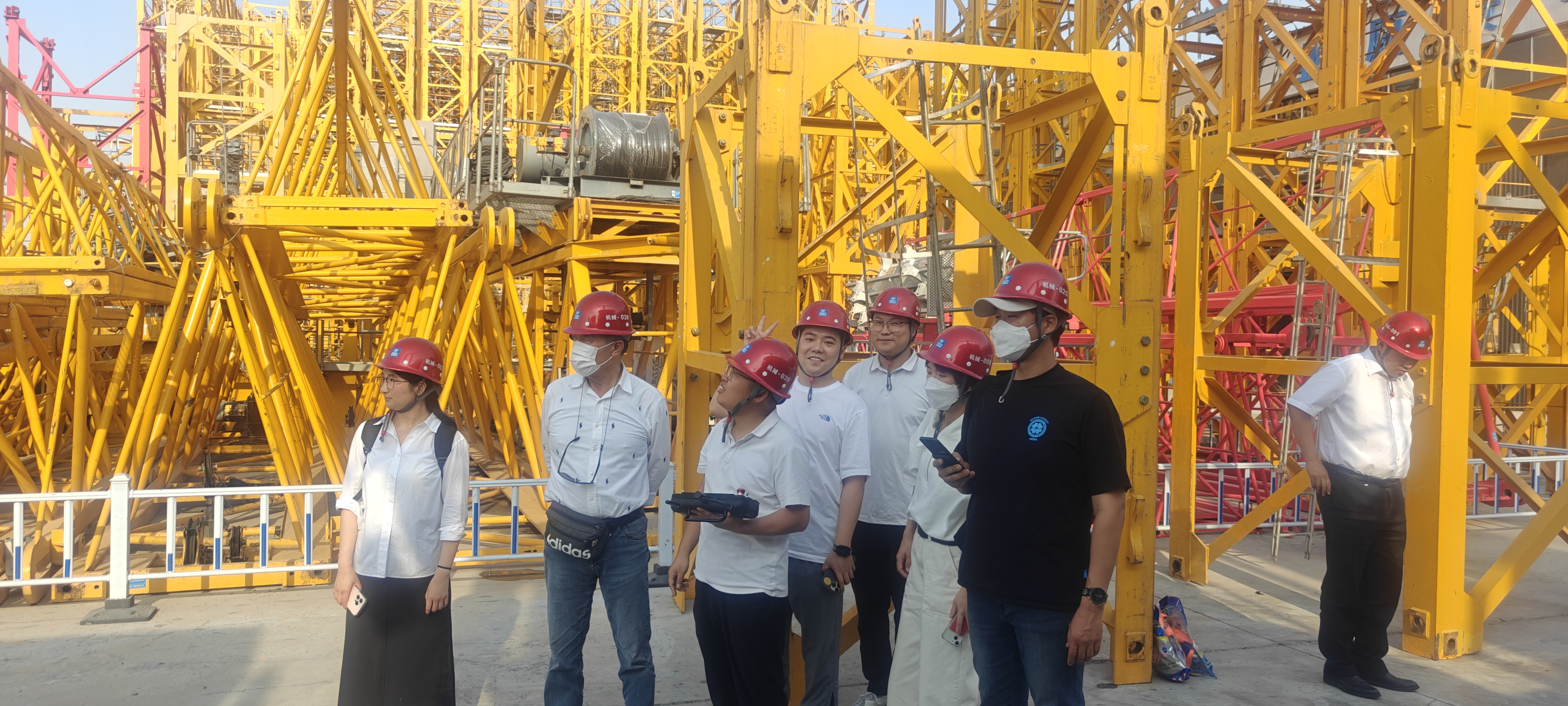
A crane rental company from South Korea came to China to source crane components and met Shandong Zhinuo at a trade show. The question they brought was not about price or lead time — it was about what happens when several tower cranes work the same airspace. What followed was a proposal, three visits to China, and a machine the client arranged himself so the equipment could be fitted and tested on it.
Read more
A UK client's custom tower crane needed a safety system built around it, not bolted onto it. ZNAQ developed the package under the crane factory's requirements, and both engineering teams confirmed mounting, calibration and alarm logic on site.
Read more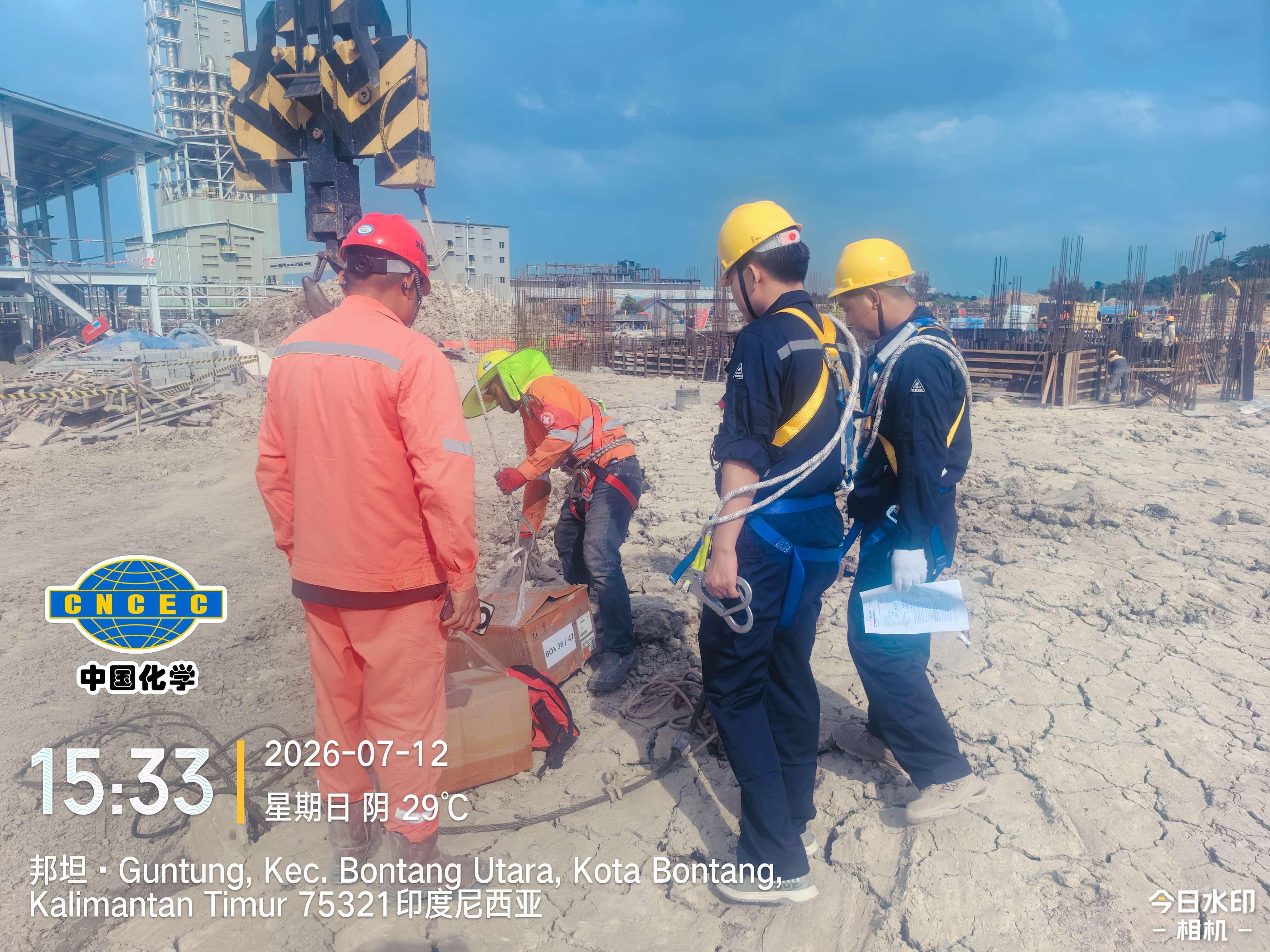
ZNAQ deployed a smart construction site platform at the PKT soda ash project in Bontang, Indonesia — labour registration, site-wide video, tower crane monitoring, dust and noise control, a site network and a bilingual command platform, live in 15 days.
Read moreArticles
Maintenance works when it is scheduled, not when it is remembered. This note lays out a practical schedule for tower crane accessories, from pre-shift checks to annual inspections, and how to keep records that mean something.
Read moreA part that fits is not always a part that is correct. This note explains how to match crane accessories to a machine, what to verify and why written confirmation matters more than a visual comparison.
Read moreQuality control is what separates a part that fits and lasts from one that merely looks right. This note covers material certificates, non-destructive testing, dimensional checks and the documents a buyer should request.
Read moreCrane accessories often travel thousands of kilometres before they are fitted. This note covers export packing, protection from corrosion and impact, documentation and the checks on arrival.
Read moreDowntime is usually caused by a small part nobody stocked. This note explains how to build an on-site spare-parts kit for tower crane accessories, what to include and how to keep it usable.
Read moreTower crane accessories live outdoors and corrode quietly. This note covers paint and galvanising, where corrosion starts, and how to inspect and repair protection before section loss begins.
Read moreBolted joints hold a tower crane together. This note explains high-strength bolts, correct torque and sequence, when a bolt may be reused and why traceability matters on structural joints.
Read morePeople climb, inspect and maintain tower cranes at height. This note covers safety ropes and lifelines, their construction and connectors, inspection and the rules that make fall protection real.
Read moreThe console is where the crane is driven and watched. This note covers control layout, display placement and how a safety-monitoring system should be integrated without crowding the operator.
Read moreThe cabin is the operator’s workplace for an entire shift. This note covers visibility, glazing, seating, attachment and the checks that keep the cabin safe and usable through the seasons.
Read moreThe tower head anchors the jib and counter-jib pendants. This note explains how the head and pendants carry tension, how alignment affects the crane and what to inspect before and during service.
Read moreThe jib sets the crane’s reach and the counter-jib balances it. This note covers lattice construction, the order of assembly, bolted joints and why adding or removing sections changes the rated capacity.
Read moreCounterweights balance the jib, and the wrong set changes the load chart. This note explains how counterweight is matched to jib length, how blocks are secured and what to check before erection.
Read moreThe hoist rope is one of the highest-wear parts of a tower crane. This note explains how rope fails, what to look for during inspection, when it must be discarded and how to replace it safely.
Read moreThe hook block is where the crane meets the load. This note explains its parts, the wear that matters, how to inspect it before a shift and when a hook must be replaced rather than reused.
Read moreThe slewing unit turns the crane and the rollers keep the trolley moving. This note identifies the wear points in both systems, explains lubrication and backlash checks, and sets out when a part should be replaced rather than adjusted.
Read moreAbove its free-standing height a tower crane must be tied back to the building. This note explains wall ties, tie spacing, building anchors and what the crew must confirm before the crane climbs.
Read moreFoundation hardware decides whether a tower crane stands plumb. This note explains anchor bolts and embedded legs, how they are positioned, and why the checks that matter happen before the concrete is poured.
Read moreThe mast is built from identical bolted lattice sections. This note explains what makes sections interchangeable, how bolted joints should be made up, and where tolerance and bolt grade decide whether a crane stays plumb.
Read moreA practical buyer guide to the mechanical accessories that keep a tower crane working: mast sections, foundation parts, wall ties, rollers, hook blocks and hoist rope. It explains how to specify a package instead of ordering one piece at a time.
Read morePlacing a precast panel or bridge segment at long radius asks two things at once, a marked line to the target and live radius, load and hook-height data. ZNAQ-JG1 and ZNAO-TG2 answer both halves before the lift begins.
Read moreNight work hides the hook and flattens depth cues, so the final metre is harder to judge. A trolley-mounted green laser marker draws the landing point on the deck and doubles as a visible zone marker for the crew after dark.
Read moreA C-hook handling system addresses the round shape of coils and rolls instead of fighting it. Coil width, inner diameter, storage position, lifting height and crane interface are reviewed together before the hook is chosen.
Read moreA modular auxiliary support beam gives long and irregular components stable load distribution and flexible support points. Capacity, beam length and lifting points are confirmed from real load data, never assumed from a similar job.
Read morePlatform docking carries the readings and alarm logs of a tower crane safety monitoring system beyond the machine, to an enterprise cloud and, where required, a regulatory one. This note explains what flows, who sees it and why.
Read moreA boom-mounted hook-tracking camera with a wireless bridge keeps the hook and load in frame as the boom telescopes, with no cable to route or crush. This note covers the mounting, the auto-zoom, the TX/RX pairing and the pre-lift video link check.
Read moreAn accident back-trace is built on the alarm log, not on memory alone. This note explains how logged tower crane data reconstructs a timeline after an incident, what the record can and cannot show, and how a review finding turns into a change on site.
Read moreA tower crane shift begins with a person walking to the cab. Optional face-ID driver identity control links operation to a recognised driver, so a shift becomes accountable and authorised. This note explains what the function does and where it sits.
Read moreA split-modular monitoring kit for mobile truck cranes uses magnetic wireless sensors, so the package fits without body cutting or circuit modification, while a cab transformer gives the host and cameras a stable 12 volts.
Read moreMillimeter-wave radar on a mobile truck crane watches the swing zone for people and obstacles, warning the crew through the cab host before contact, and fitting alongside the panoramic cameras without cutting the machine body or changing its circuits.
Read moreA 360-degree panoramic camera and an 11.6-inch cab host give a truck crane crew a live view of the machine surroundings while the screen also shows load, moment, boom length, radius, height, tilt and wind, changing how blind lifts are set up, run and reviewed.
Read moreBlind lifts happen when geometry, not carelessness, hides the hook. This note explains how an HD along-boom camera, a low-latency wireless bridge and a cab display give the operator a live, real-time view of the hook and the landing zone, and where visualization still defers to the banksman and the lift plan.
Read moreLoad, moment, radius, height, slew, wind and tilt each answer a different question on a tower crane. This note explains what every measurement tells a crew and why reading the seven values together is what matters.
Read moreOverload and threshold alarms are only as good as their settings. This note explains where tower crane limits come from, how the system sounds an alarm in the cab, and why a warning that is ignored is worse than none.
Read moreZone limiting fences a tower crane into the areas it may work and out of those it must avoid, using line, triangle, quadrilateral and circle obstacles up to eight zones a machine. This note explains the shapes and how a site sets them.
Read moreOn a site where several tower cranes share one airspace, group anti-collision auto-networks the machines, calculates their relative positions and pre-warns each operator before two jibs can conflict. This note explains how the ZNAO-TG2 builds that picture.
Read moreA tower crane black box records load, moment, radius, height, slew, wind and tilt, and logs alarms for audit, inspection and accident back-trace. This note explains what is stored and how an inspector reads the log.
Read moreA trolley-mounted laser marker needs power where the trolley lives. This note compares the charging-pile type, with a charging pile and a 12 V ternary lithium pack, and the solar type, with a 20 W panel and a 10 Ah control box.
Read moreHand signals are the backbone of crane communication, but distance and glare can hide them. A green laser landing marker gives the operator and the signalman one shared point on the deck, cutting misread final approaches without replacing the signal.
Read moreA tower crane laser positioning system mounts on the trolley and projects a green landing point onto the ground, so operator and signalman see the same mark. This note explains what the ZNAQ-JG1 is, how it is set up and what changes on site.
Read morePhilippine crane rules sit in three layers: the 1989 OSHS, DOLE Department Order No. 13 of 1998, and the revised OSH implementing rules effective 16 May 2025. Test certificates, TESDA operator qualifications and permits to operate, explained.
Read moreTajikistan’s Law No. 14 of 28 February 2004 treats a crane as equipment inside a registered hazardous production facility. GOST 35321-2025 on overland rail crane tracks, adopted with Tajikstandart’s vote, took effect on 1 January 2026.
Read moreThailand’s OSH Act B.E. 2554 (2011) has applied since 16 July 2011, and the B.E. 2564 (2021) crane rules since 31 May 2021. After January 2026 gantry collapses, a 26 May inquiry put crane inspection on a 30-day clock.
Read moreKyrgyzstan joined the Eurasian Economic Union on 12 August 2015, bringing TR CU 010/2011 into force there. A national law, No. 160 of 2 August 2016, makes a site with permanently installed lifting mechanisms a hazardous facility.
Read moreSingapore’s Workplace Safety and Health (Operation of Cranes) Regulations 2011 have applied since 10 September 2011. Circular MOM/OSHD/2025-05, effective 12 September 2025, resets the test intervals and drops the post-registration overload test.
Read moreUzbekistan's Cabinet Resolution No. 53 of 12 February 2026 makes technical examination mandatory for cranes and hoists, and Resolution No. 325 of 25 June 2026 re-accredits the expert organisations that issue the conclusions.
Read moreTR CU 010/2011 has governed cranes in Kazakhstan since 15 February 2013, and Law No. 196-VIII ZRK of 24 June 2025 rewrote how they are supervised: registration before first operation, 12-month and 3-year inspections, and a one-working-day notice.
Read moreVietnam’s list of machinery needing strict occupational safety management sits in Circular 36/2019/TT-BLĐTBXH, in force since 1 March 2020, with Decree 44/2016/NĐ-CP setting inspection. Cranes and hoists are named, and a 2026 circular changes the dossier.
Read moreIndonesia’s Permenaker No. 8 Tahun 2020, in force since 12 June 2020, sets inspection, testing and licensing rules for lifting and hauling equipment. Permenaker No. 11 Tahun 2026, effective 3 July 2026, rebuilds labour supervision on risk-based checks.
Read moreMalaysia’s Occupational Safety and Health (Amendment) Act 2022 [Act A1648] and the Factories and Machinery (Repeal) Act 2022 [Act 835] took effect on 1 June 2024, moving crane inspections to a workplace statute. The 15-month cycle and the penalties follow.
Read moreThe EU Machinery Regulation (EU) 2023/1230 replaces the old Machinery Directive on 20 January 2027, and Regulation (EU) 2026/1744 has since folded AI rules into it. This briefing covers what changes for slings, shackles and software safety functions.
Read moreA practical checklist for procurement teams specifying lifting attachments for the first time.
Read moreEurope's new machinery regulation puts crane safety software inside conformity assessment from January 2027, while British rules still insist anti-collision aids never replace a safe system of work. What that means if you specify or buy the equipment.
Read moreTechnical documents
Use these document groups to identify the information required for a product review, project approval, installation plan, or procurement discussion. Files are prepared against the actual product or system scope.
A structured starting point for load data, working load limit, dimensions, interfaces, operating conditions, and applicable review questions.
For product selection and project engineering reviewA practical checklist for drawings, inspection records, marking, packing information, and project-specific documentation requirements.
For technical approval and procurement alignmentResource centre FAQ
Please share the product code or intended application, your country, project stage, and any required standard or document format. This helps us return the relevant file set instead of a generic attachment.
Yes. We can align the requested technical brief, product information, quality checklist, and available installation or commissioning information around the stated review scope.
Document availability depends on the selected configuration, destination, and project requirements. We confirm the applicable documents before making a delivery commitment.
Document request
Tell us what you are reviewing and where the project will be delivered. We will confirm the relevant materials, technical questions, and next response.