▌ APPLICATION NOTE · OCTOBER 2026 · SAFETY ROPES AND LIFELINES Safety Ropes and Lifelines: Fall Protection for Crane Work at Height A tower crane is maintained by people who climb it. Every inspection, every lubrication point and every bolt check happens at height, often on a narrow walkway in wind. Safety ropes and lifelines are the equipment that stands between a slip and a fall, and like every other part of the crane they need to be specified, inspected and replaced on a schedule. This note covers safety ropes and lifelines as equipment: what they are made of, how they connect, how they should be inspected and when they must be retired. Local work-at-height regulations and the equipment maker’s instructions govern the requirements; this note explains how to apply them on a crane site.
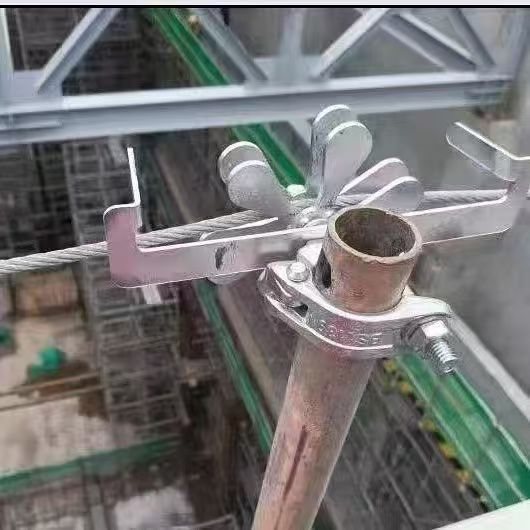
01 WHAT A LIFELINE IS A lifeline is a rated line that gives a person a secured anchor point while working at height. It may be a braided steel-wire rope or a high-strength synthetic line, depending on the system design. It is used with a harness and, where required, a fall arrester that grips the line if a fall occurs. The lifeline is not a handrail and not a general-purpose rope. It is a piece of personal protective equipment with a rated strength, a defined anchor and a defined inspection regime. Using an unrated rope for the same job defeats the purpose of having one. ▌ RATED EQUIPMENT A lifeline has a rated strength and a defined anchor, unlike a general rope. ▌ WITH HARNESS AND ARRESTER It works as a system with a harness and, where required, a fall arrester. ▌ NOT A HANDRAIL It is fall protection, not a substitute for guard rails or safe access. 02 CONSTRUCTION AND CONNECTORS Steel-wire lifelines are durable and resist abrasion; synthetic lines are lighter and easier to handle but more sensitive to cuts and UV. Whichever is used, the end connectors and the anchor points are as important as the line itself. Connectors should be rated, compatible with the harness and free of damage. The anchor must be capable of taking the fall load and must be positioned so that a fall is arrested with as little drop as possible. An anchor that is too low or too far to the side increases the fall distance and the swing. ▌ LINE AND CONNECTOR The connectors and anchors are as important as the line. ▌ RATED AND COMPATIBLE Connectors must match the harness and be undamaged. ▌ ANCHOR POSITION A poor anchor increases fall distance and swing. 03 INSPECTION BEFORE EVERY USE Safety ropes should be inspected before every use. For a wire lifeline, look for broken wires, kinks, corrosion and damage at the terminations. For a synthetic line, look for cuts, fraying, glazing from heat and UV degradation. Connectors should open and close freely and lock positively. Any line that has been subject to a fall should be retired, even if it looks intact. The energy of a fall can damage a line internally in ways that are not visible. ▌ CHECK BEFORE USE Inspect the line and connectors before every climb. ▌ TYPE-SPECIFIC WEAR Wire shows broken wires; synthetic shows cuts, fraying and UV damage. ▌ RETIRE AFTER A FALL A line that has arrested a fall is retired, not reused.
04 STORAGE AND SERVICE LIFE Storage affects life. Ropes should be hung or coiled loosely, kept away from oil, chemicals, sharp edges and direct sun. A rope stored on the ground in a dirty container will be damaged before it is ever used. Synthetic lines are particularly sensitive to chemicals and heat. Every lifeline should have a record: when it was put into service, when it was inspected and when it is due for retirement. A line with no record is a line nobody can vouch for. ▌ STORE PROPERLY Hang or coil loosely, away from oil, chemicals, sharp edges and sun. ▌ CHEMICAL SENSITIVITY Synthetic lines are damaged by chemicals and heat. ▌ KEEP A RECORD Service date, inspections and retirement date should be recorded. 05 MAKING FALL PROTECTION REAL Equipment only protects if it is used. A lifeline that is present but not clipped on, an anchor that is convenient rather than rated, or a harness that is worn loosely all turn the equipment into decoration. The site culture has to make using the system normal and expected. Training matters as much as hardware. People working at height should know how to inspect the line, how to connect, where the anchors are and what to do if a fall occurs. A well-chosen lifeline in untrained hands is not protection. ▌ USE IT A lifeline that is not connected protects nobody. ▌ RATED ANCHORS ONLY Convenience is not a reason to use an unrated anchor. ▌ TRAIN THE USERS Knowing how to inspect and connect is part of the protection. PROCUREMENT IMPACT ● Specify lifelines and connectors to the fall-protection standard used on site. ● Confirm rated strength and compatibility with the harnesses in use. ● Ask for anchors rated for fall arrest and positioned for short fall distance. ● Include a logbook for each lifeline in the package. ● Plan a replacement interval based on the maker’s guidance and site conditions. WHAT TO WATCH ● Watch broken wires, kinks and termination damage on wire lifelines. ● Watch cuts, fraying, heat glazing and UV damage on synthetic lines. ● Watch connectors for damage and positive locking. ● Watch storage, which shortens life faster than use. ● Watch for the fall that looks harmless; retire the line anyway. ABOUT ZN Industrial (Shandong Zhinuo) designs and manufactures crane safety monitoring systems, positioning systems and mechanical auxiliary handling equipment for overseas construction, industrial and steel markets. Standards and regulations vary by market — local rules still govern your site. ▌ CONTACT shandongzhinuo@outlook.com +86 176 6371 0314 · en.znaqkj.com SOURCES · local work-at-height regulations · lifeline maker’s instructions · crane site safety plan |
Articles / crane
Safety Ropes and Lifelines: Fall Protection for Crane Work at Height
People climb, inspect and maintain tower cranes at height. This note covers safety ropes and lifelines, their construction and connectors, inspection and the rules that make fall protection real.