▌ CASE STUDY · TOWER CRANE SAFETY · SOUTH KOREA
A conversation about tower crane safety that ended up on their own cranes
A crane rental company from South Korea came to China to source crane components and met Shandong Zhinuo at a trade show. The question they brought was not about price or lead time — it was about what happens when several tower cranes work the same airspace. What followed was a proposal, three visits to China, and a machine the client arranged himself so the equipment could be fitted and tested on it.
This is what the problem looked like, what was proposed, and how the client verified it before committing to anything.
▌ 01 THE STARTING POINT
A rental company carries the risk
The client is a crane rental company in South Korea, and that identity matters more than it first appears. A manufacturer delivers a tower crane and its responsibility essentially ends at handover. A rental company hands the same machine to a site and stays answerable for how it performs there, shift after shift. Every lift taken on that site is carried on the rental company's account.
The two sides met at a trade show while the client was in China sourcing crane components. What they sat down to talk about was not price and not delivery dates. It was crane safety.
The question the client brought was specific. He did not ask whether Zhinuo had a safety product on the shelf. He asked:
▌ “When several tower cranes are working the same airspace, a single crane's own limiter is simply not enough. How do you deal with that?”
To answer it properly, it helps to be clear about where a limiter stops.
▌ 02 WHY A LIMITER IS NOT ENOUGH
Three gaps a limiter cannot close
▌ SAFETY DEVICES WORK ALONE Almost every tower crane leaving a factory today carries limiters — overload, over-moment, hoist height at the top, radius beyond its limit, all of it can be stopped. But these protections share one thing: they only ever see the machine they are fitted to.
On a site, several tower cranes often work the same airspace at the same time. Whether two jibs can meet at some slewing angle cannot be judged by a crane's own limiter, because it has no idea where the neighbouring crane is, which way it is facing, or how far its jib has slewed. Protection on the individual machine can be complete, and the risk between machines is still wide open.
▌ A BLIND LIFT DEPENDS ON A RADIO The driver sits in a cab with the view blocked by the machine's own structure, by buildings and by stacked material. Where the load is, whether anyone is underneath, whether it can be landed at all — much of the time it simply cannot be seen.
In those moments the only source of information is the signaller on the ground, one instruction at a time over the radio. Which means the safety of a blind lift rests entirely on one radio and one person's judgement.
▌ THE INCIDENT THE CLIENT STILL REMEMBERS The client described something he had not been able to put down.
It was a routine blind lift, and it failed on two very small things. The radio happened to be flat — the link between the ground and the cab simply went. And the sling at the ground end had not been secured properly — the load was not tied down.
The driver lifted as he normally would. The load came off in mid-air and fell, and two people on the ground were slightly injured.
The outcome was not the worst possible one. What it exposed was a complete chain of failure: the link broke, the sling was missed, the driver could not see — and not one of those three could have been caught automatically by any device on the crane.
In the client's own words, it is something he is still afraid of when he thinks about it.
▌ 03 THE PROPOSAL
Visual monitoring and anti-collision, in one unit
The proposal Zhinuo put forward was a single unit combining tower crane visual monitoring with multiple-crane anti-collision. The approach was to take what the client was worried about and turn it into a set of values that can be measured live, given a threshold, and alarmed on automatically.
▌ HEIGHT Live hoist height, with top-of-travel limiting and over-travel detection
▌ RADIUS Where the trolley sits on the jib — how far the load is from the mast
▌ SLEWING The angle the jib is at right now — the base data for anti-collision
▌ LOAD The actual weight on the hook
▌ LOAD MOMENT Weight × radius — over the limit it alarms and restricts the dangerous motion
▌ ANTI-COLLISION Neighbouring cranes' live position and angle fed in, with slow-down, warning and stop zones set between jibs
▌ ZONE LIMITING Three-dimensional no-go volumes drawn around the site — an existing building, an area where people are working — with a warning the moment the jib approaches
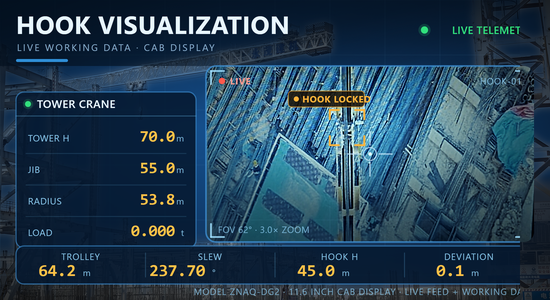
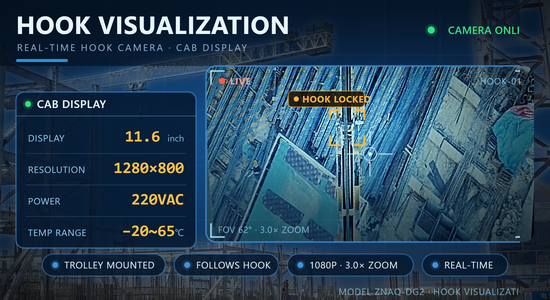
Alongside the digital monitoring, the unit carries a live visual feed: hook position, how the load is sitting and the landing area are shown directly on a screen in the cab, so the driver no longer has to judge any of it from someone else's instructions.
Put simply, the logic of the package is this: what used to depend on people watching, calling and remembering becomes something the equipment can see, judge and stop by itself. The client was satisfied with the proposal.
▌ 04 FROM A MODEL TO A REAL MACHINE
A scale model first, then a machine of their own
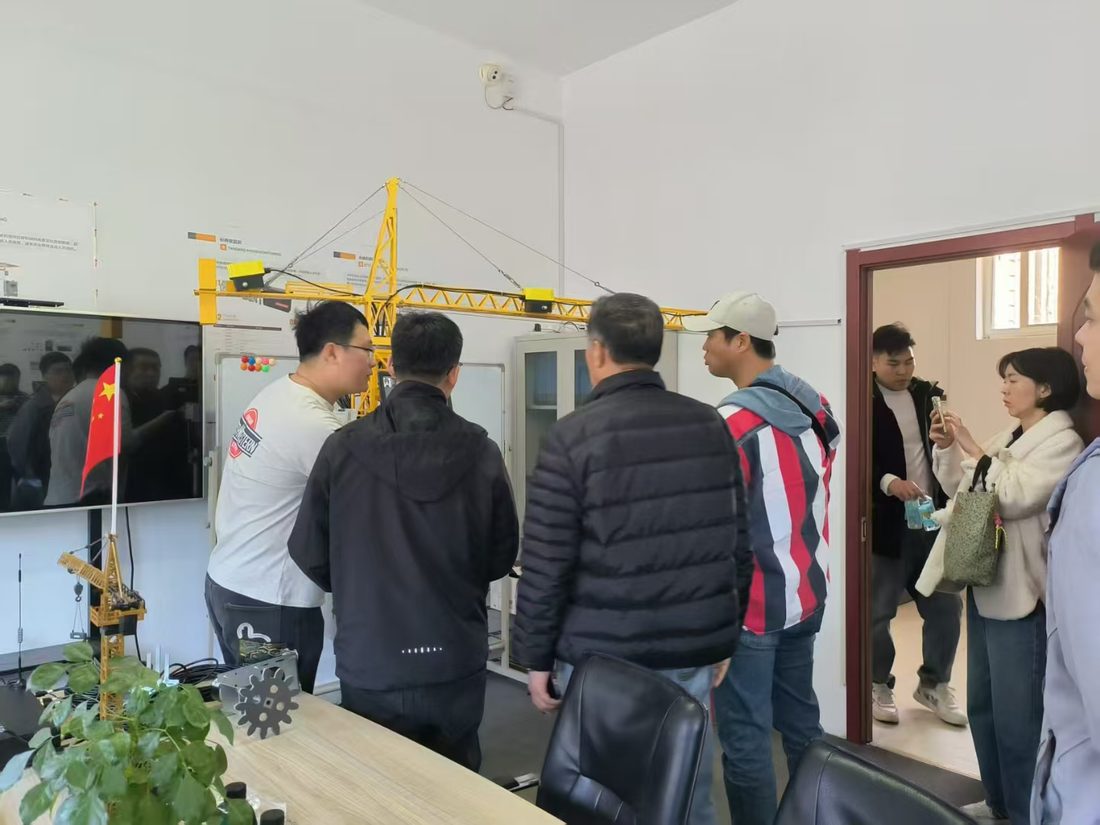
FIG 1 · The scale tower crane model in the office, used to run through the anti-collision alarm logic point by point.
The first formal visit came in winter, when the client travelled to Zhinuo's offices. There was no full-size machine there, so the engineers brought out a scale model of a tower crane — jib, trolley and hook all working.
▌ STEP ONE As a second crane's jib slews into a dangerous angle, what appears on screen first
▌ STEP TWO At what point the unit moves into slow-down
▌ STEP THREE At what point it stops outright
The value of the model was never that it looked good. It was that when does it alarm, what does it say, what does the machine actually do became something the client could check for himself. Most of his reservations sat exactly here — whether the unit would fire alarms for nothing, and whether it would fail to stop when it should.
Afterwards the client said the product was good, but he wanted to go home and discuss it first.
What he did next was more practical than placing an order. He went back and coordinated with his own tower crane supplier, arranged for one machine to be released from their fleet, and handed it to Zhinuo to fit and test.
This step is the hinge of the whole case, and it says the most about how the client was thinking. A rental company buying safety equipment is not buying a concept. The unit has to go onto a real machine, run in real working conditions, and show data that holds up before it can be rolled out across a fleet. By pushing this forward himself, the client was asking for a result on a real crane, not another presentation.
▌ 05 FITTING AND TESTING
Fitted on the crane, checked against the sheet
The unit went onto the crane and testing began. The method was direct: rather than judging whether the numbers looked good on screen, the printed parameter sheet was taken up and checked item by item against what the equipment was actually doing.
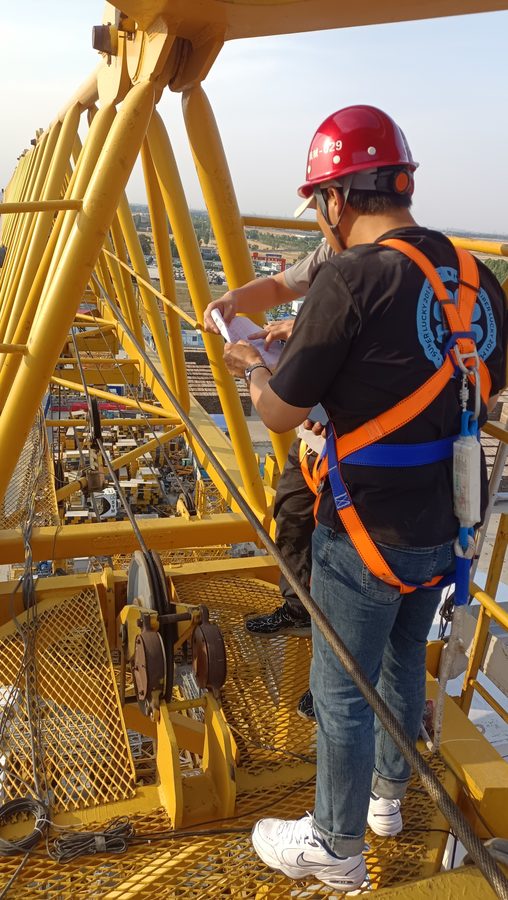
FIG 2 · On the tower crane platform: the unit fitted and running, checked in place before handover.
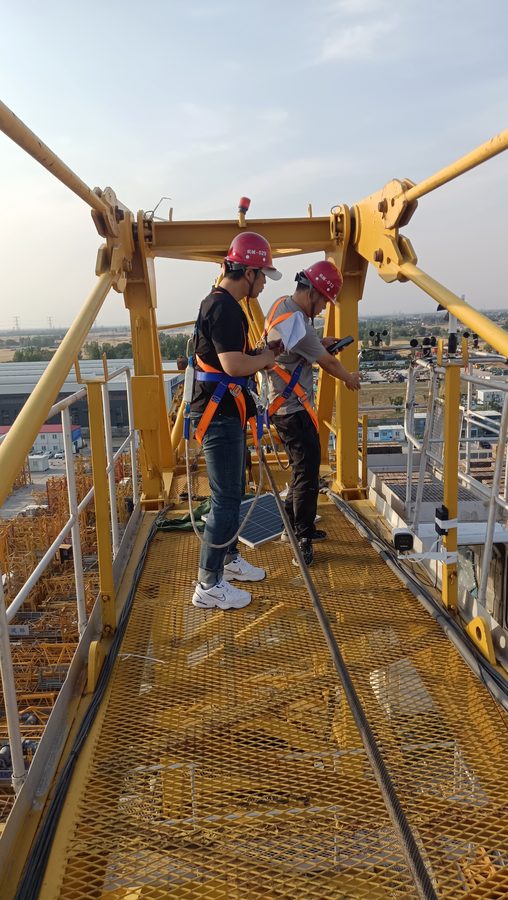
FIG 3 · Parameter sheet in hand, reading by reading, against the live operating data.
▌ SLEWING ANGLE Turn the jib to a given angle — does the displayed angle match
▌ LOAD & MOMENT Are the weight and moment readings accurate
▌ ZONE LIMITS Approach a configured no-go volume — does the alarm trigger as expected
▌ ANTI-COLLISION As a neighbouring crane's jib closes into the slow-down and warning zones, does the unit respond as set
The conditions were not easy either. It was midsummer, the work was at height on the crane platform with harnesses on the whole time, and installation and commissioning had to be done metre by metre, tens of metres up.
When testing was finished, the client was very satisfied with the result.
▌ 06 THE THIRD VISIT
Five people, to a rental yard
It did not end there. The client later brought a five-person delegation to China for a third visit. This time it was not the office they came to — they went straight to the rental yard of their partner, to see how the equipment behaves in real daily business.
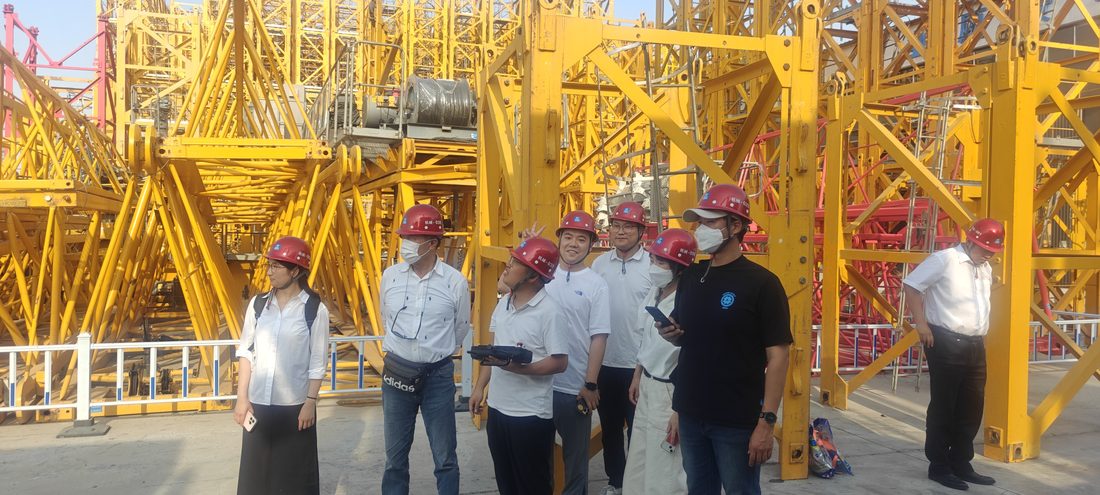
FIG 4 · The third visit: the client's five-person delegation at the partner's rental yard, with the crane in service behind them.
What they saw there was not a demonstration. It was a unit running day to day, on someone else's site, on someone else's tower crane.
From seeing a proposal, to seeing a model, to seeing the equipment perform at a yard connected to their own business — the client kept adding conditions to be satisfied, one step at a time. That is the usual path an overseas buyer takes on a piece of safety equipment, and each step here was passed.
▌ 07 TWO ENGINEERING TEAMS
Two engineering teams, one interpreter
During the visit the engineers from both sides went through several rounds of discussion. A very practical obstacle was language: both sides brought their own specialists, and much of the detail — parameters, working conditions — had to be worked through line by line, with an interpreter passing it back and forth on site.
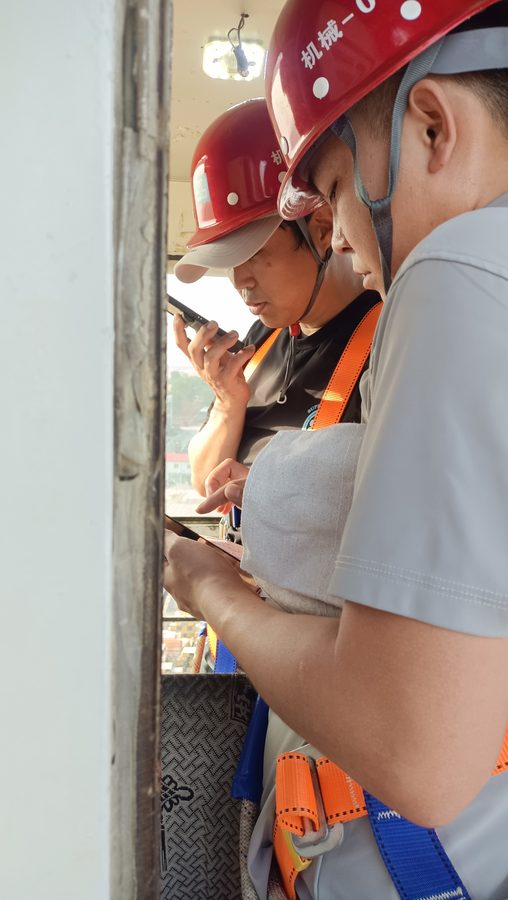
FIG 5 · Line by line, on site: the two engineering teams working through parameters with an interpreter.
▌ SETTINGS How parameters are set, and what the alarm thresholds are based on
▌ CONDITIONS How to adjust them across dense multiple-crane areas, single-crane work and night shifts
▌ FLEET How several units would be managed together later on
▌ PEOPLE How site staff and drivers get up to speed on the equipment
These are not things that can be settled in a showroom. They have to be talked through with the machine and the actual data in front of you.
▌ 08 WHAT WAS PROVEN
Three things this case proves
● The product held up in testing. Checked item by item against the parameter sheet, the readings matched and the alarms triggered as designed.
● The installation process works. The unit can be fitted to a crane in the client's own fleet and handed over in working order, on a machine that has to go back into service.
● The team stays with it. From the trade show, to the office and the model, to the test on a crane, to the visit at the rental yard — across most of a year and two countries, support never lapsed.
For a rental company, those three things carry more weight than any specification sheet: the equipment fits, the data is accurate, the alarms are reliable — and when something goes wrong, there is someone to call.
▌ ABOUT ZNAQ
Shandong Zhinuo Safety Technology develops and deploys tower crane safety monitoring systems — digital measurement of height, radius, slewing, load and load moment, together with multiple-crane anti-collision and hook visual monitoring — configured for each project and supported on site, from installation and commissioning through to operator training. Tell us the crane model, the site conditions and how many machines, and we will scope the package and quote it.
▌ CONTACT shandongzhinuo@outlook.com +86 176 6371 0314 · en.znaqkj.com