▌ APPLICATION NOTE · OCTOBER 2026 · FOUNDATION AND BASE Anchor Bolts and Embedded Legs: Getting the Base Right Before the Pour The foundation is the one part of a tower crane that cannot be corrected later. Once the concrete has set, the position of the anchor bolts and embedded legs is fixed, and the crane either sits on them correctly or spends its life being shimmed and adjusted. That is why the most important work on foundation hardware happens before the pour, not after. This note covers the two pieces of hardware that connect the crane to the concrete: the foundation anchor bolts and the pre-embedded legs. It explains what each does, how they are set on a template, what should be checked before and after the pour, and how the hardware should be protected once the crane is standing. The crane maker’s foundation drawing governs the work, supported by local structural codes.
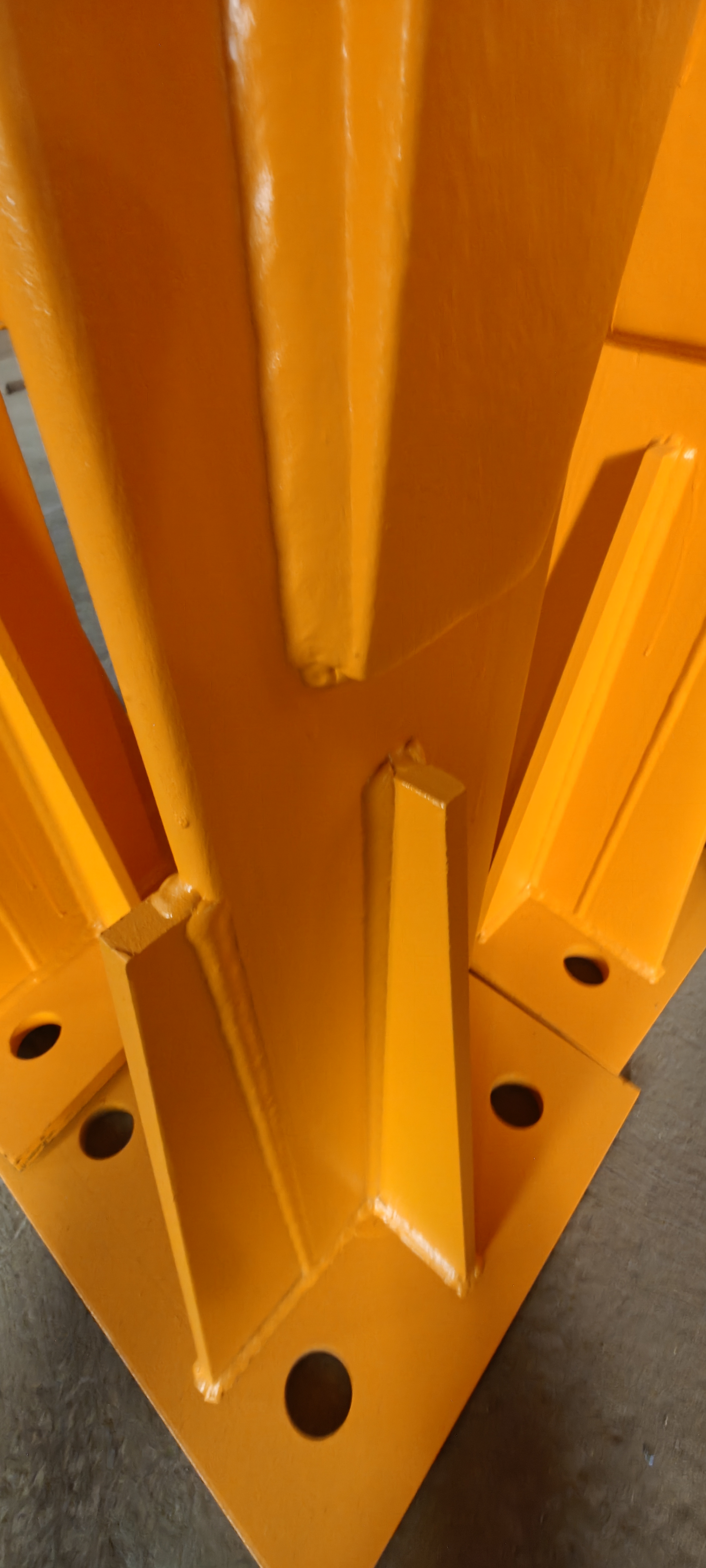
01 TWO PARTS, ONE JOB Anchor bolts and embedded legs do the same job in different ways. Anchor bolts are high-strength threaded rods or U-bolts cast into the concrete, with the projecting thread holding the base frame down. Embedded legs are heavier steel legs cast into the foundation that carry the base frame on top. Some cranes use one, some use the other, and some use both in combination. Whichever is used, the principle is the same: the hardware transfers the crane’s vertical load, uplift and shear into the concrete, and it holds the mast plumb. If the hardware is misplaced, the load path is no longer what the designer intended. ▌ BOLTS OR LEGS Anchor bolts hold the base frame down; embedded legs carry it. Some cranes use both. ▌ LOAD INTO CONCRETE The hardware transfers vertical load, uplift and shear into the foundation. ▌ POSITION IS EVERYTHING A misplaced bolt or leg cannot be corrected once the concrete has set. 02 THE POSITIONING TEMPLATE Both systems are set using a positioning template, a steel frame that holds the bolts or legs at the exact spacing and projection shown on the foundation drawing. The template is levelled, tied to the reinforcement so it cannot move during the pour, and checked immediately before and after concrete is placed. The template is the single most important control on the foundation. Its level, its orientation and the projection of each bolt or leg should be recorded. If the template shifts during the pour, the error is built into the foundation and the crane will not sit correctly. ▌ LEVEL AND ORIENT The template sets spacing, projection and orientation; it must be levelled and fixed. ▌ TIE IT DOWN Secure the template to the reinforcement so it cannot move during the pour. ▌ CHECK AND RECORD Check the template before and after the pour, and keep the record. 03 CONCRETE AND CURING The concrete must reach its specified strength before the crane is erected, and the foundation drawing will state the grade and the curing requirements. Erecting on concrete that has not reached strength is a common and serious error, because the hardware is only as good as the material around it. Curing should be planned, not improvised. The surface should be protected from rapid drying, and the anchor threads should be kept clean and protected during the pour and curing period. Concrete splashed onto threads is difficult to remove and can damage the thread when the nuts are fitted. ▌ STRENGTH FIRST Erect only after the concrete has reached the specified strength. ▌ PROTECT THE THREADS Keep anchor threads clean and covered during the pour and curing. ▌ PLAN THE CURE Protect the surface from rapid drying and follow the drawing’s curing requirements.
04 FITTING THE BASE FRAME When the concrete has cured, the base frame is set onto the anchor bolts or embedded legs, levelled and then fixed. Levelling is done with shims or levelling nuts, and the frame should be checked in both directions before the nuts are finally torqued. A base frame that is out of level will tilt the mast above it. After the first working cycles, the nuts should be re-checked. Loads settle the frame onto its seating, and a joint that was tight at erection can loosen slightly once the crane starts working. The manual will state the re-check interval and the torque value to use. ▌ LEVEL IN BOTH DIRECTIONS Check the base frame for level before final torque. ▌ TORQUE TO SPEC Use the maker’s torque value and sequence for the anchor nuts. ▌ RE-CHECK AFTER WORKING Re-check nut tightness after the first working cycles. 05 LONG-TERM PROTECTION Foundation hardware lives in a wet, gritty environment and corrodes quietly. The exposed threads above the base frame should be greased and capped, and the area around the hardware should drain rather than hold water. Where the foundation is below ground, a protective detail around the leg or bolt prevents water pooling against the steel. During dismantling, the hardware should be inspected before it is reused or abandoned. A bolt that has been overloaded, corroded or bent should not go back into service, and the foundation itself should be checked for cracking before a new crane is erected on it. ▌ GREASE AND CAP Protect exposed threads and keep water from pooling around the hardware. ▌ CHECK FOR CRACKS Inspect the foundation for cracking before reusing it for a new crane. ▌ DO NOT REUSE DAMAGED BOLTS Overloaded, corroded or bent hardware should be replaced. PROCUREMENT IMPACT ● Order anchor bolts and embedded legs to the crane maker’s foundation drawing. ● Specify steel grade, thread size and galvanising on the quotation. ● Ask for a positioning template to be supplied or drawn with the hardware. ● Confirm the required concrete grade and curing period before scheduling erection. ● Include thread caps and protective grease with the foundation package. WHAT TO WATCH ● Watch the template during the pour; movement there cannot be corrected later. ● Watch concrete strength before erection; hardware is only as strong as the concrete around it. ● Watch thread damage from splashed concrete and clean it before the nuts go on. ● Watch base-frame level in both directions before final torque. ● Watch corrosion at the exposed thread and keep water away from the foundation. ABOUT ZN Industrial (Shandong Zhinuo) designs and manufactures crane safety monitoring systems, positioning systems and mechanical auxiliary handling equipment for overseas construction, industrial and steel markets. Standards and regulations vary by market — local rules still govern your site. ▌ CONTACT shandongzhinuo@outlook.com +86 176 6371 0314 · en.znaqkj.com SOURCES · crane maker’s foundation drawing · local structural code · ISO 12480-1 |
Articles / crane
Anchor Bolts and Embedded Legs: Getting the Base Right Before the Pour
Foundation hardware decides whether a tower crane stands plumb. This note explains anchor bolts and embedded legs, how they are positioned, and why the checks that matter happen before the concrete is poured.