▌ CASE STUDY · UK CLIENT ON-SITE INSPECTION
A UK client flew in to inspect a custom tower crane safety system
The crane was built to order at a Chinese tower crane factory. ZNAQ Safety Technology developed the matching inspection and safety monitoring package. Then the client came to see it on the machine — and both engineering teams sat down on the same structure.
What follows is what the visit covered: the project behind it, what the system monitors, what was checked on site, and how the two technical teams agreed to make it land on this specific machine.
▌ 01 THE PROJECT
A non-standard crane needs a system built around it
Tower cranes are among the riskiest machines on a construction site: the load is out of the operator's sight, the ground crew work underneath it, several towers swing through overlapping arcs, and a night shift makes all of it worse. The industry's answer is a crane safety monitoring system that turns load, radius, height, wind, speed and crane-to-crane distance into figures the operator can act on.
This project was different. The machine was not a catalogue model — the UK client commissioned a new special tower crane, built to order at a Chinese crane factory. A one-off machine raises two problems straight away:
▌ STRUCTURE There are no standard mounting points. Every sensor, camera, host and display has to be positioned against a structure that was never designed for off-the-shelf equipment.
▌ RANGE & INTERFACE Load, hoist height, travel speed and the other values fall outside the standard ranges, so the measuring range, the accuracy and the communication interface all have to be re-matched.
So the client was not buying something off the shelf. They needed a monitoring system developed alongside the machine — and that matching package is what ZNAQ Safety Technology delivered.
▌ 02 WHAT THE SYSTEM MONITORS
Seven items, one operator, one screen
The package covers the core safety dimensions of tower crane operation:
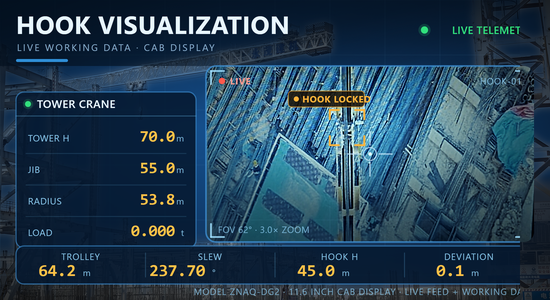
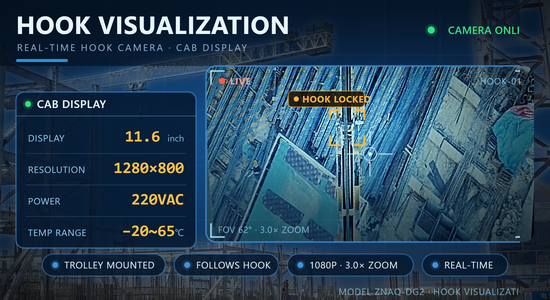
▌ FULL-AREA VISION The hook and the load area on camera, so the operator sees the site from the cab instead of lifting blind.
▌ HOIST HEIGHT Hook height above ground with limiting, against over-hoisting and low-level collision.
▌ LOAD Live load weight and moment, so an overload is stopped before it is lifted.
▌ WIND SPEED Live wind speed and gusts, with a warning once the threshold is passed.
▌ ANTI-COLLISION Between cranes and between working zones: slow-down, warning and stop zones, so an alarm comes before two jibs can reach into each other's area.
▌ TRAVEL SPEED The operating speed of the crane motions, confirming the machine is running inside a safe, controllable envelope.
▌ DRIVER FACE RECOGNITION Identity verification at the seat. One machine, one named operator, every unlock traceable.
Face recognition is the item the client singled out. Control is released only when the face at the seat matches a registered identity. A key can be handed over and a card can be passed on — a face cannot. Every start-up is tied to a named operator, so the responsibility chain stays intact after the shift and after the handover.
▌ 03 ON-SITE INSPECTION
Four stops, four things to settle
On the day of the visit, the client delegation joined ZNAQ's technical team at the works and went through the crane and its safety package item by item.
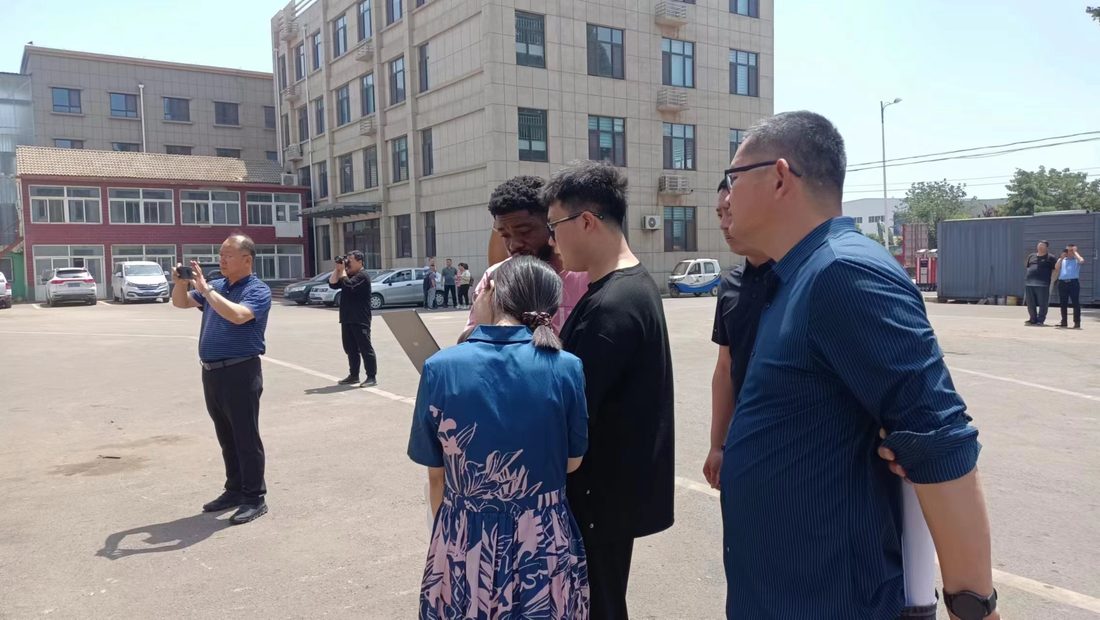
FIG 1 · The client delegation and ZNAQ's technical team in the works yard, checking the documents against the machine.
▌ STOP ONE Drawings, screen and machine, side by side. The visit started in the yard, laptop in hand, with the technical documents held up against the machine itself. Checking drawing, screen and hardware against each other is the quickest way to confirm that the configuration on a one-off machine is the configuration that was agreed.
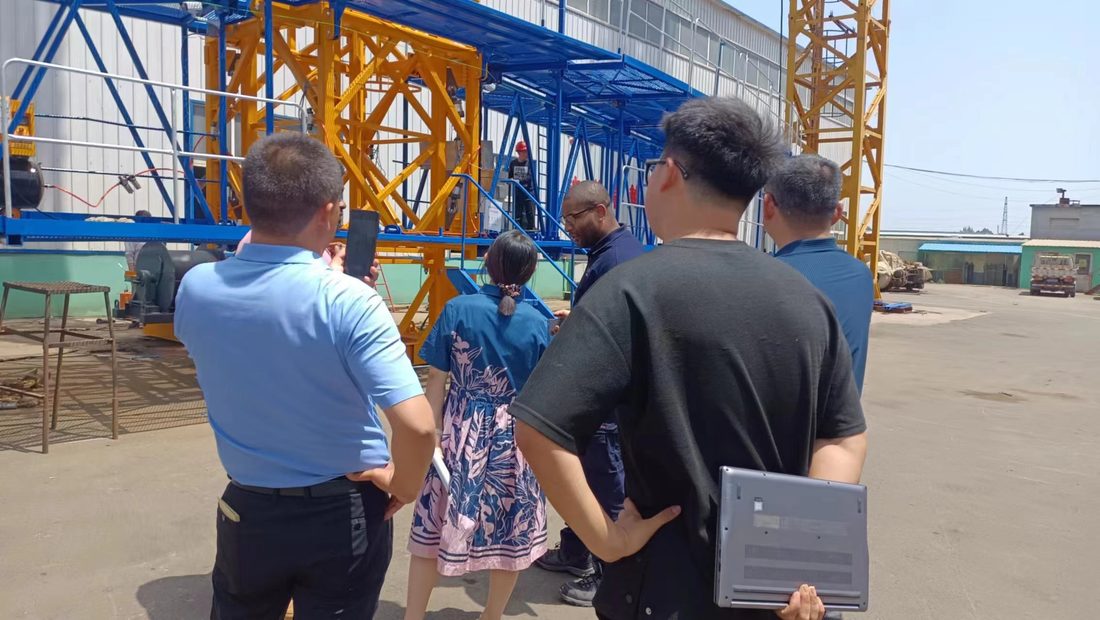
FIG 2 · Confirming mounting positions for the sensors, cameras and host in front of the crane structure.
▌ STOP TWO Where does each unit go? In front of the structure, the two teams worked through mounting positions. A non-standard machine has no ready-made datum, so the height, radius, slew and tilt sensors, the cameras, the host and the cabin display all had to be positioned against the actual steel — with cable routing and service access taken into account, not just the drawing.
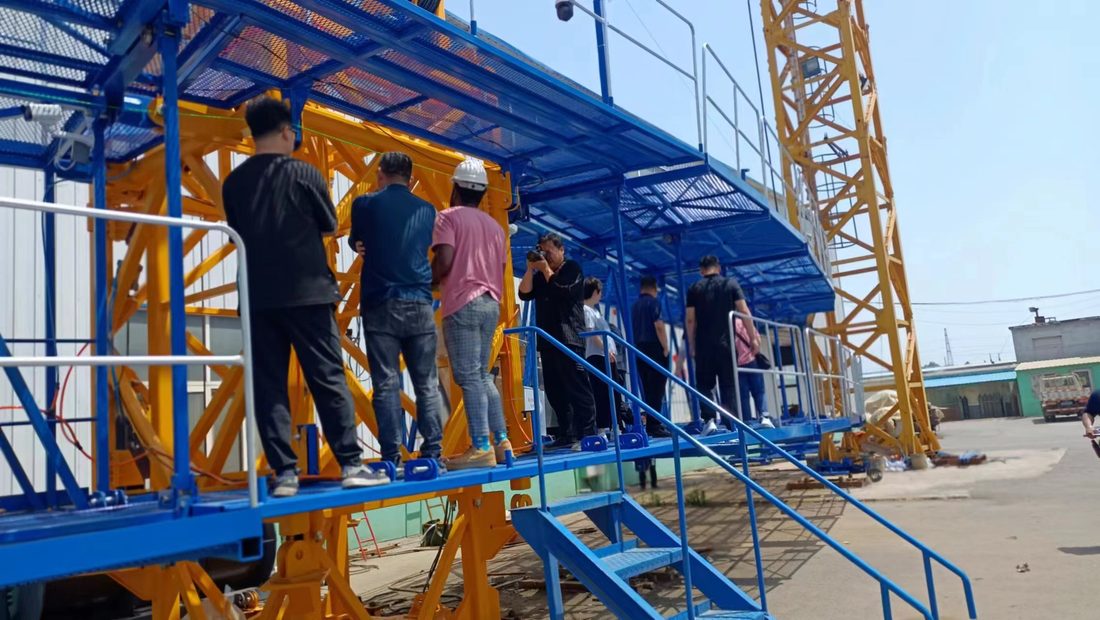
FIG 3 · On the platform walkway, checking equipment layout and the operator's sightline from the seat.
▌ STOP THREE Up on the machine. The client then went up onto the platform walkway for a close look. Three things were checked here: whether every position is genuinely reachable from the walkway and the working deck, whether the cable route is practical to install and to maintain, and whether the operator actually sees the picture that matters from the seat.
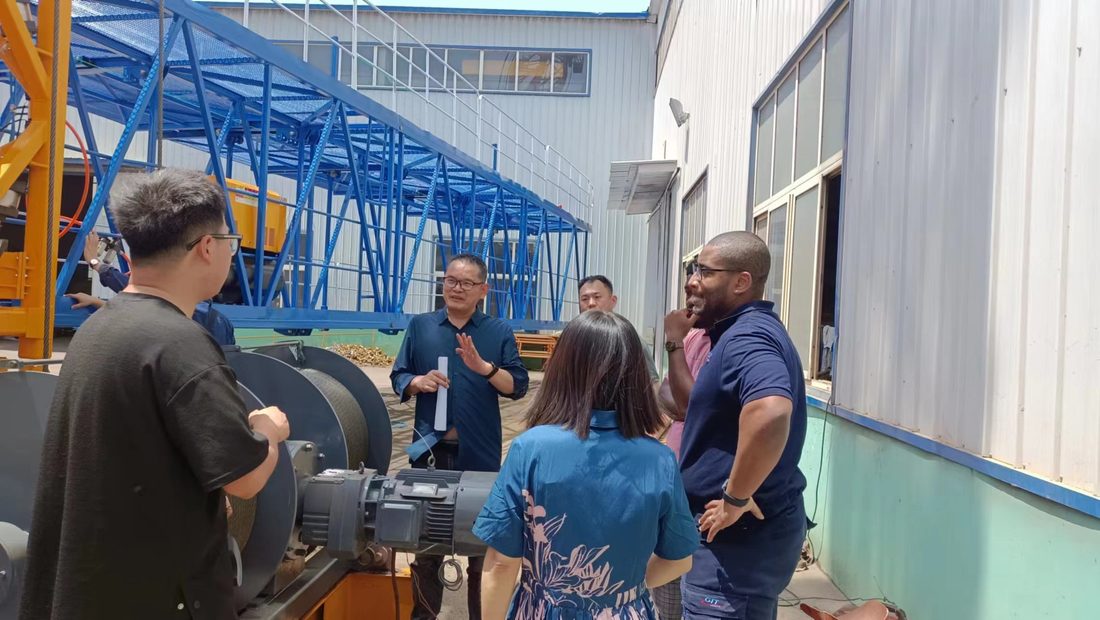
FIG 4 · At the hoist winch and rope drum, ZNAQ's engineer explains against the hardware while the client confirms measuring range and calibration point by point.
▌ STOP FOUR At the winch: the numbers meet the hardware. The most detailed discussion happened at the hoist winch and rope drum. ZNAQ's engineer went through the approach against the real mechanism, and the client raised specific questions on how the hoist motion is measured, how the measuring range matches, and how it is calibrated. Because the equipment is developed as a matching package, its range, accuracy and calibration have to answer to this machine's actual mechanisms.
▌ 04 TECHNICAL ALIGNMENT
Two engineering teams, one structure
After the walk-round, both engineering teams sat down on a single question: how does this package actually land on this machine? The agenda:
▌ MOUNTING & INTERFACE Position, fixing method and cable route for every unit, and whether a transition bracket is needed.
▌ RANGE & CALIBRATION Value range, accuracy and on-site calibration method for load, hoist height, travel speed and the rest.
▌ ANTI-COLLISION ZONES Slow-down, warning and stop zones set from the site plan and the working arcs of the neighbouring towers.
▌ DATA & DISPLAY What appears on the cabin screen, how the data is uploaded and viewed remotely, and what triggers an alarm.
▌ FACE RECOGNITION Enrolment, what happens when a match fails, and how operating records are stored and traced.
That session turned a list of system functions into a buildable, calibratable, inspectable checklist for one specific machine. On a non-standard project this is exactly the stage where things go wrong — and exactly the stage that has to be done face to face, with both sides looking at the same piece of steel.
▌ 05 CLIENT FEEDBACK
Three questions settled
At the end of the visit, the UK client was very satisfied with both the technical package and the on-site support from ZNAQ's team.
For the client, the visit settled three things: that the monitoring equipment really does fit this non-standard machine; that the mounting and calibration plan is workable on site rather than only on paper; and that ZNAQ's team can develop alongside the crane and adjust to the project's requirements as they arise.
For a buyer ordering a one-off machine from overseas, those three answers are worth more than a brochure.
▌ 06 WHAT THIS CASE SHOWS
Three takeaways
● Off-the-shelf rarely fits a one-off machine — the more custom the crane, the more the safety package has to be designed around it
● Safety equipment only counts if it mounts, measures and shows: a long function list is worthless if the position is wrong or the picture is unreadable from the seat
● On an export project, delivery is technical alignment — the client is overseas and the crane is built in China, so meeting at the machine is the cheapest way to move the risk to before shipment
● Software language, logo and hardware configuration can be customized for your market
▌ ABOUT ZNAQ
ZNAQ Safety Technology develops crane safety monitoring and inspection equipment — hook vision, load and height limiting, wind monitoring, multi-crane anti-collision, travel speed monitoring and driver face recognition — configured to order for non-standard cranes and individual projects. Tell us the crane model, the site and how many towers, and we will develop the package around your machine.
▌ CONTACT shandongzhinuo@outlook.com +86 176 6371 0314 · en.znaqkj.com