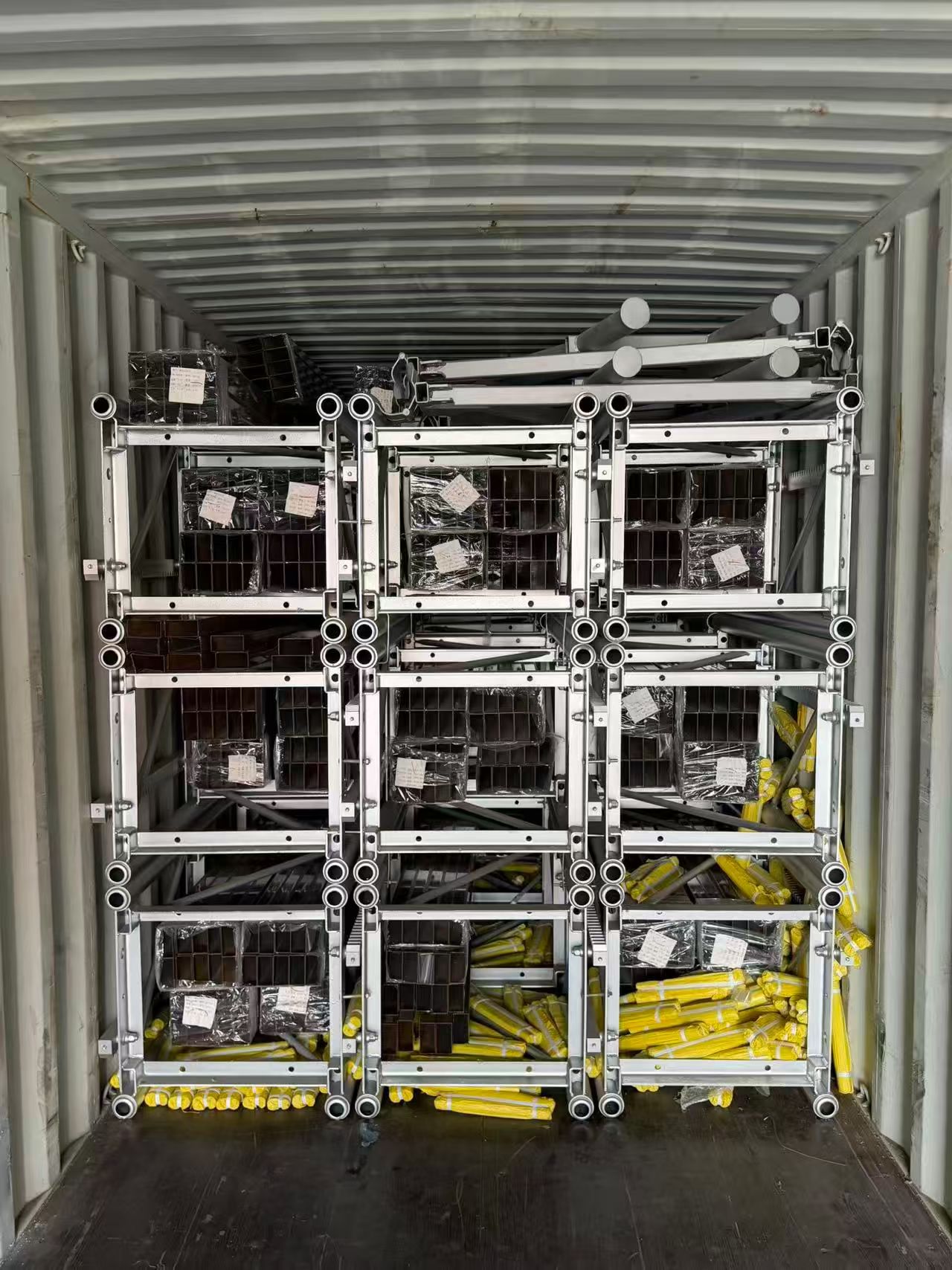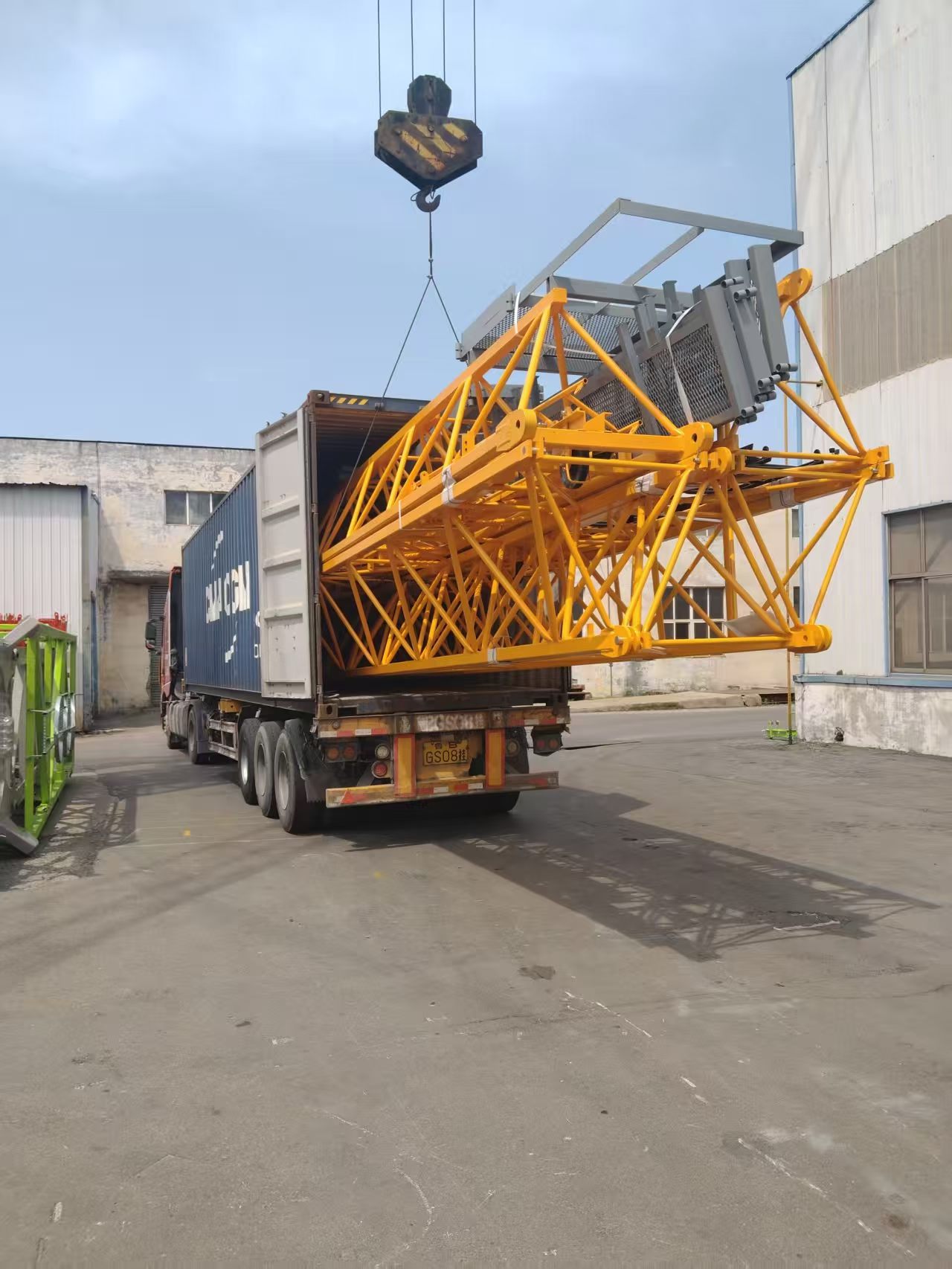
▌ APPLICATION NOTE · OCTOBER 2026 · JIB AND COUNTER-JIB Jib and Counter-Jib Sections: Assembly Order, Bolted Joints and Rated Capacity The jib is the part of the crane everyone sees, and the counter-jib is the part that makes it work. Together they form a balanced arm that reaches out to the working radius and carries the trolley, the hook and the load. Both are built from lattice sections, and both depend on their bolted joints and pendants being correct. This note covers the jib and counter-jib as assemblies: how they are constructed, the order in which sections should be assembled, how the joints are made up and why changing the number of sections changes the crane’s rated capacity. The crane maker’s assembly manual governs the work.
01 HOW THE JIB IS BUILT A tower crane jib is usually a triangular or square lattice, built from steel chords and seamless-tube bracing. The top chord carries the trolley and the lower chord carries the trolley rail. Sections are bolted end to end, and the assembled jib is held up by tie rods or pendants from the tower head. The counter-jib is built in a similar way, but it carries machinery rather than a trolley: the hoist winch, the slewing mechanism, the counterweights and, on many cranes, the operator cabin. Its length and weight are part of the crane’s balance. ▌ LATTICE CHORDS AND BRACING The jib is a lattice with chords and tube bracing. ▌ TOP AND LOWER CHORD The top chord carries the trolley; the lower chord carries the rail. ▌ THE COUNTER-JIB CARRIES MACHINERY Winch, slewing mechanism, counterweights and often the cabin. 02 ASSEMBLY ORDER Jib sections are assembled in the order the manual specifies, usually from the root outward or from the tip inward depending on the crane and the erection method. Each section is aligned, pinned and bolted before the next is added. Assembling out of order or leaving joints loose until the end makes alignment harder and can distort the lattice. The pendants or tie rods are installed as the jib is assembled, not after it is fully built. They carry the jib’s weight and keep it in its working position, so they are part of the assembly sequence rather than an afterthought. ▌ FOLLOW THE SEQUENCE Assemble sections in the manual’s order, aligning and bolting each before the next. ▌ PINS BEFORE BOLTS Align and pin each joint before final tightening. ▌ PENDANTS AS YOU GO Install pendants during assembly; they carry the jib’s weight. 03 BOLTED JOINTS AND PENDANTS The bolted joints in the jib are made up with the specified high-strength bolts, torqued in sequence. The joints must close evenly, and any gap or misalignment should be investigated rather than pulled together with the bolts. After assembly, the joints should be re-checked. Pendants and tie rods take tension and set the jib’s working angle. They must be matched in length and correctly pinned at both ends. A pendant that is the wrong length changes the geometry and loads the jib differently from the design. ▌ TORQUE IN SEQUENCE Make up the joint evenly and to the maker’s torque value. ▌ DO NOT PULL GAPS CLOSED A gap means a misalignment to investigate, not a bolt to force. ▌ MATCHED PENDANTS Pendants set the jib angle; the wrong length changes the loading.
04 WHY SECTION COUNT CHANGES CAPACITY Adding or removing jib sections changes the working radius and the load chart. A longer jib reaches further but lifts less at that radius. The rated capacity is not a property of the crane alone; it is a property of the crane in a particular configuration, with a particular jib length and counterweight. That is why any change to the jib must be accompanied by the matching load chart and, where required, a matching change to the counterweight. A site that lengthens a jib without updating the chart is working to figures that no longer apply. ▌ CONFIGURATION DEFINES CAPACITY Rated capacity depends on jib length and counterweight, not the crane alone. ▌ LONGER JIB, LESS AT RADIUS Reach increases but capacity at radius falls. ▌ UPDATE THE CHART Any jib change needs the matching load chart and counterweight. 05 INSPECTION AND STORAGE On arrival and before assembly, jib sections should be checked for chord straightness, weld condition, coating damage and joint condition. Sections should be stored on supports so the chords do not take a set, and the trolley rail should be protected from damage. In service, the checks are the ones the manual calls for: joint tightness after assembly and after the first lifts, pendant condition, rail wear and any sign of deformation. A jib that has been overloaded should be inspected before it is used again. ▌ CHECK ON ARRIVAL Inspect chords, welds, coating and joints before assembly. ▌ PROTECT THE RAIL The trolley rail is easily damaged in storage and handling. ▌ INSPECT AFTER OVERLOAD Any overload calls for a jib inspection before further use. PROCUREMENT IMPACT ● Order jib and counter-jib sections to the crane model and jib length. ● Specify bolt grade, pendant lengths and the assembly sequence documentation. ● Ask for a matching load chart with any change in jib configuration. ● Include trolley rail protection and storage advice in the delivery. ● Confirm pendant and tie-rod sets are matched and complete. WHAT TO WATCH ● Watch assembly order; it affects alignment and joint condition. ● Watch for joints pulled together with bolts instead of being aligned. ● Watch pendant lengths, which set the jib angle and loading. ● Watch any jib change without an updated load chart and counterweight. ● Watch the trolley rail, which is easily damaged in storage. ABOUT ZN Industrial (Shandong Zhinuo) designs and manufactures crane safety monitoring systems, positioning systems and mechanical auxiliary handling equipment for overseas construction, industrial and steel markets. Standards and regulations vary by market — local rules still govern your site. ▌ CONTACT shandongzhinuo@outlook.com +86 176 6371 0314 · en.znaqkj.com SOURCES · crane maker’s assembly manual · EN 14439 · ISO 12480-1 |
Articles / crane
Jib and Counter-Jib Sections: Assembly Order, Bolted Joints and Rated Capacity
The jib sets the crane’s reach and the counter-jib balances it. This note covers lattice construction, the order of assembly, bolted joints and why adding or removing sections changes the rated capacity.