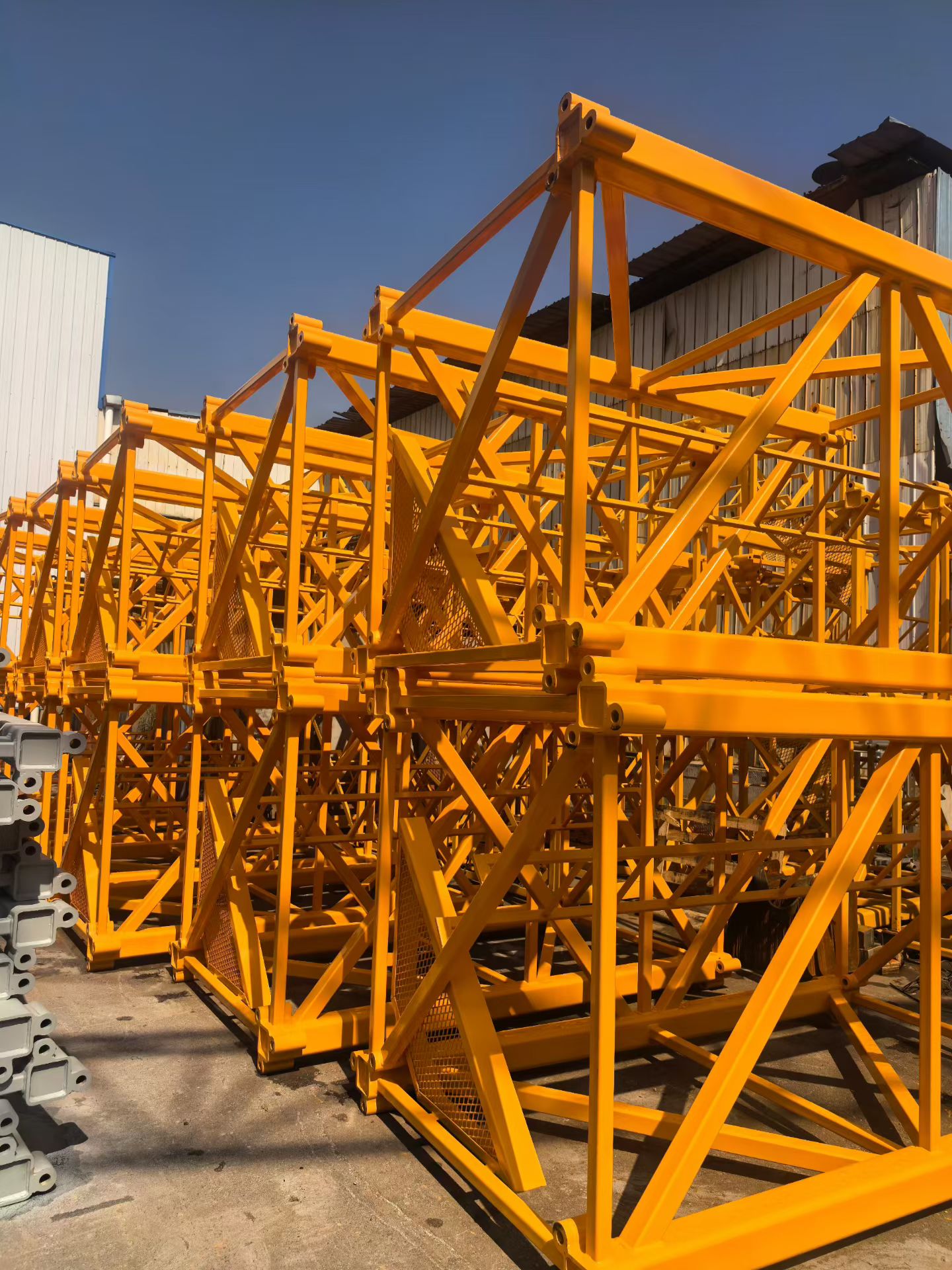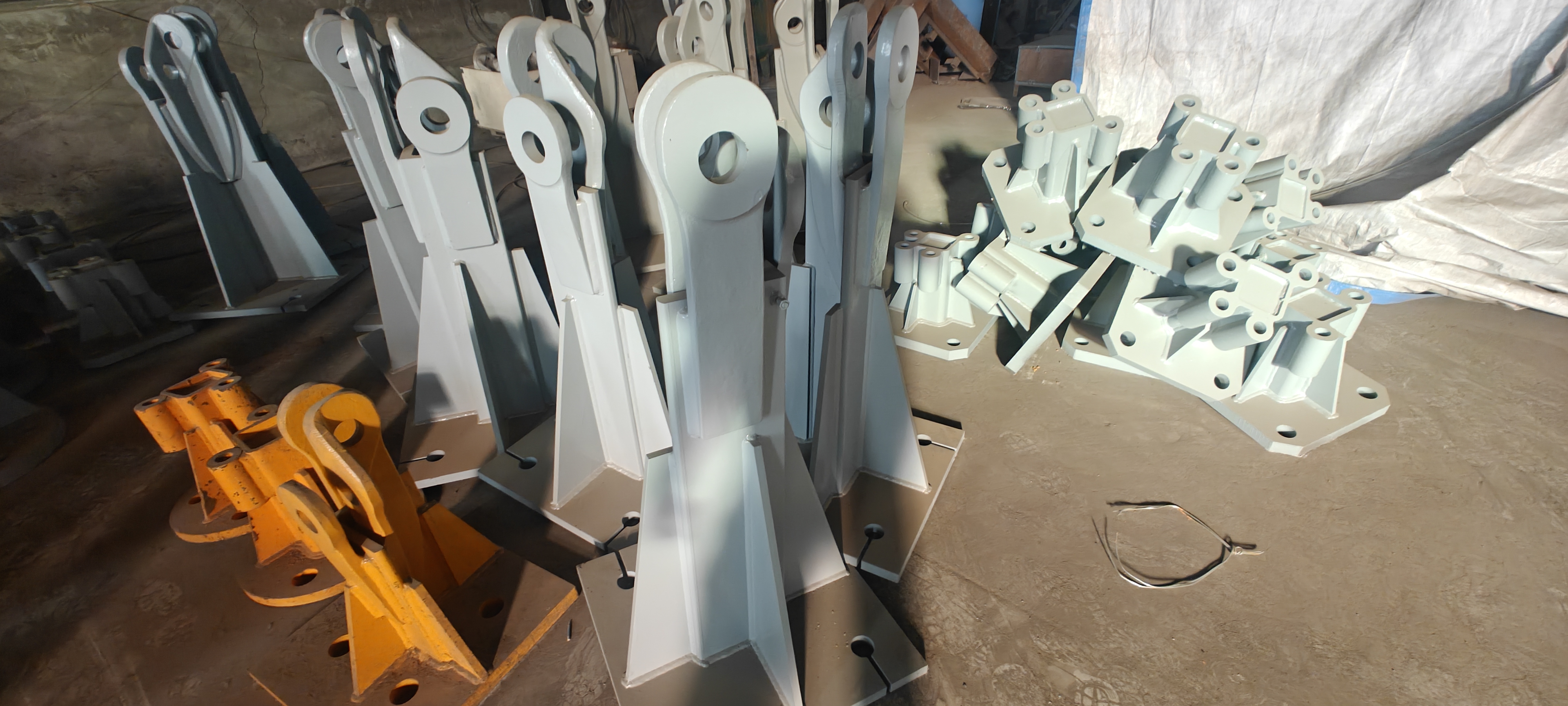
▌ APPLICATION NOTE · OCTOBER 2026 · TOWER CRANE ACCESSORIES Tower Crane Accessories: What a Complete Spare-Parts Package Should Include A tower crane is bought once and maintained for years, and the parts that keep it working are not the parts anyone notices on the day of delivery. They are the mast sections that get added as the building climbs, the anchor bolts that hold the base down, the wall ties that let the crane rise above its free-standing height, the rollers that carry the trolley, the hook block that meets the load and the hoist rope that lifts it. Bought one at a time in an emergency, each of these is a small crisis. Bought as a package against a maintenance plan, they are ordinary consumables. This note is written for the buyer who is assembling that package. It groups tower crane accessories by function, explains what belongs in each group, and sets out the questions to settle before an order is placed. The aim is not to sell every part at once, but to make sure that when a part is needed the site already knows the size, the standard and the source. Lifting operations are governed by standards such as ISO 12480-1, EN 14439 and BS 7121, and the accessories discussed here support those rules rather than replace them.
01 A PACKAGE, NOT A PILE OF PARTS The difference between a package and a pile of parts is the crane itself. Every accessory is matched to a specific machine: a mast section to a chord size and bolt pattern, a counterweight set to a jib length, a wall tie to a tie distance. A package is organised around that machine, so each item is recorded against the crane model and the position it serves. A pile is what a site ends up with after years of buying whatever was available when something broke. Building the package means listing the crane model, the jib length, the maximum free-standing height and the site conditions first. Those four facts narrow almost every choice that follows, from the number of mast sections to the size of the foundation hardware. ▌ START FROM THE MACHINE Record the crane model, jib length and free-standing height before choosing any accessory. ▌ GROUP BY FUNCTION Structural, hoisting, and operator and safety groups keep an order logical and auditable. ▌ PLAN, DO NOT PANIC-BUY A package bought against a maintenance plan is cheaper than parts bought during a breakdown. 02 THE STRUCTURAL GROUP The structural group is everything that carries load into the ground or into the building: mast standard sections, the base frame, embedded legs and foundation bolts, and the wall ties and anchorage frames used above the free-standing height. These parts are dimensionally tied to the crane and to each other, so they should be ordered from the same drawing set and checked against the maker’s manual. This is also the group where interchangeability must be treated with care. A mast section from another maker may look identical and still differ in chord wall thickness, bolt grade or locating pin size. The safe assumption is that structural parts are specific to the machine unless the manufacturer confirms otherwise in writing. ▌ LOAD PATH FIRST Mast, base, foundation hardware and wall ties carry the crane’s loads, so they must match the maker’s drawing. ▌ DIMENSIONAL MATCH Chord size, bolt pattern and pin size decide whether a section truly fits. ▌ NO SILENT SUBSTITUTION Structural parts from another maker need written confirmation, not visual comparison. 03 THE HOISTING GROUP The hoisting group is the working end of the crane: the hook block and safety latch, the hoist rope, the sheaves and the reeving accessories that route the rope. These are the highest-wear items on the machine, and they are also the ones most directly connected to safety. A hook block with a worn throat or a rope past its discard criteria is not a maintenance inconvenience; it is a lifting hazard. For this group, the package should include not only spares but the inspection tools that decide when a spare is due: a hook gauge, a rope inspection guide and the maker’s discard table. Buying the part without the criteria for replacing it leaves the decision to guesswork. ▌ HIGHEST WEAR Hook blocks and hoist rope wear fastest and deserve the most frequent inspection. ▌ CRITERIA BEFORE SPARES Keep the maker’s discard table beside the spare part so replacement is a decision, not a guess. ▌ SAFETY-CRITICAL A worn hook or rope is a lifting hazard, not a routine maintenance item.
04 THE OPERATOR AND SAFETY GROUP The operator and safety group covers the cabin, the control console and the fall-protection equipment used by people working at height: safety ropes, lifelines and their connectors. On monitored machines the console also becomes the place where the safety-monitoring display is mounted, so its layout should be agreed with the monitoring supplier rather than improvised on site. These items are often treated as non-structural and therefore less important. In practice a cabin with poor visibility, a console that puts the wrong control under the operator’s hand or a lifeline that is never inspected all create risk in a quieter way than a cracked weld, but they create it every shift. ▌ COMFORT IS SAFETY A cabin with good visibility and a logical console reduces operator error over a long shift. ▌ AGREE THE CONSOLE LAYOUT Where monitoring is fitted, the display and controls should be planned together. ▌ LIFELINES ARE EQUIPMENT Safety ropes need inspection criteria and a replacement interval like any other part. 05 ORDERING AND COMPATIBILITY A good order is specific. It names the crane model and serial where available, the part number, the quantity and the drawing or standard the part is made to. It states the material and coating, and for structural items it asks for material certificates. It also asks one question that saves a great deal of trouble later: is this part interchangeable with the existing one, or is it matched to a particular machine? Finally, the order should plan for storage. Steel parts stored flat and dry, ropes hung rather than coiled on the ground and hooks kept off concrete all last longer. A package that arrives well and is stored badly becomes a pile again within a season. ▌ NAME THE MACHINE Crane model, serial, part number and drawing make an order unambiguous. ▌ ASK FOR CERTIFICATES Material certificates and coating specification belong in the order, not in a later email. ▌ PLAN STORAGE Dry, flat storage for steel and hung storage for rope protect the package after delivery. PROCUREMENT IMPACT ● List the crane model, jib length and maximum free-standing height before pricing any accessory. ● Group the order by structural, hoisting, and operator and safety items so nothing is forgotten. ● Ask for material certificates and coating specification on every structural part. ● Buy the inspection criteria and tools alongside the spare parts they govern. ● Confirm interchangeability in writing before accepting a part from a different maker. WHAT TO WATCH ● Watch for parts that look identical but differ in wall thickness, bolt grade or pin size. ● Watch the free-standing limit; wall ties are only correct if their spacing matches the manual. ● Watch the cabin and console as safety items, not as comfort extras. ● Watch rope and hook storage, because poor storage shortens life before the part is even fitted. ● Watch the plan. A complete package supports a lift plan; it does not write one. ABOUT ZN Industrial (Shandong Zhinuo) designs and manufactures crane safety monitoring systems, positioning systems and mechanical auxiliary handling equipment for overseas construction, industrial and steel markets. Standards and regulations vary by market — local rules still govern your site. ▌ CONTACT shandongzhinuo@outlook.com +86 176 6371 0314 · en.znaqkj.com SOURCES · ISO 12480-1 · EN 14439 · BS 7121 · crane maker’s manual |
Articles / crane
Tower Crane Accessories: What a Complete Spare-Parts Package Should Include
A practical buyer guide to the mechanical accessories that keep a tower crane working: mast sections, foundation parts, wall ties, rollers, hook blocks and hoist rope. It explains how to specify a package instead of ordering one piece at a time.