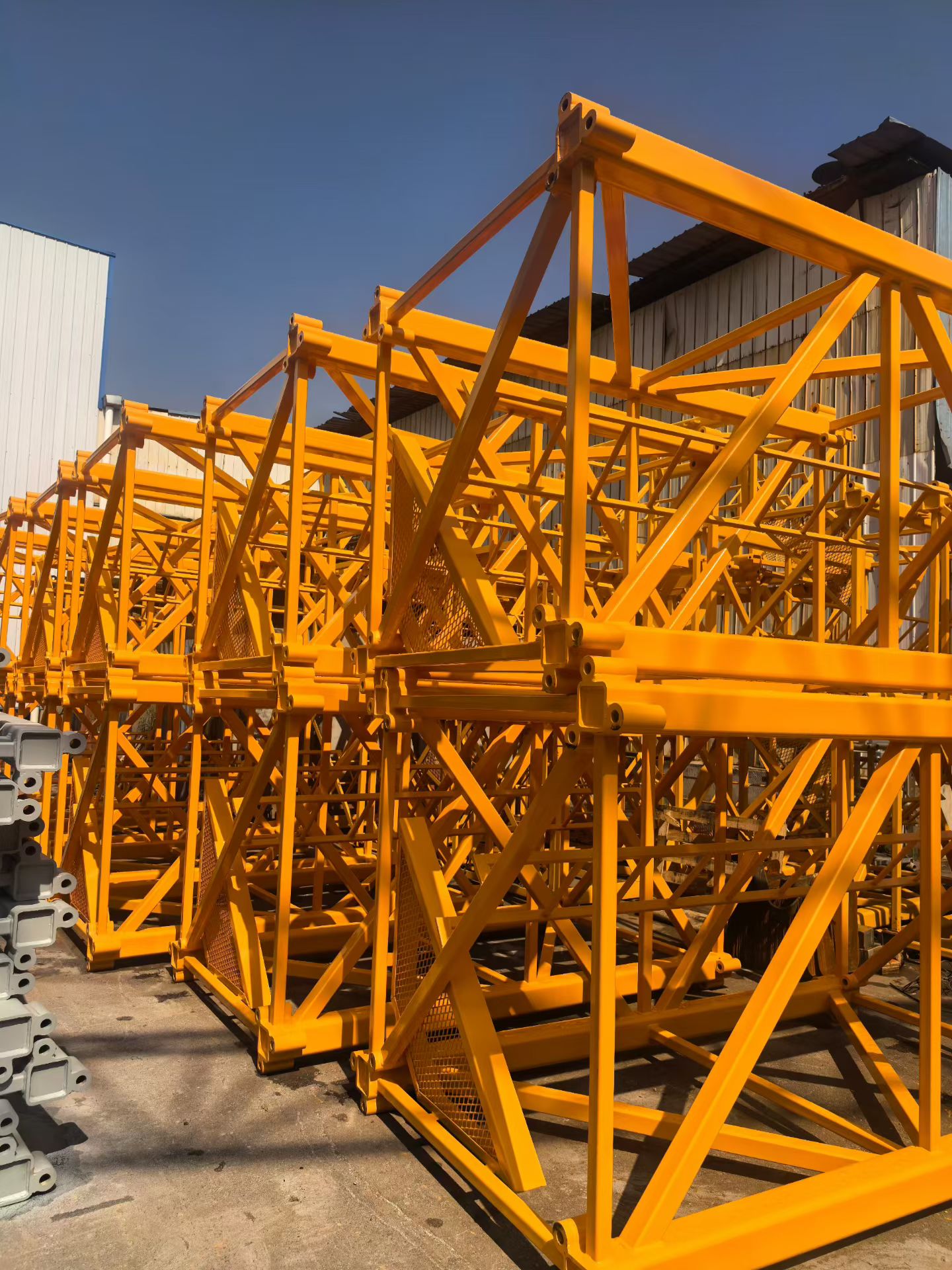
▌ APPLICATION NOTE · OCTOBER 2026 · HIGH-STRENGTH BOLTS High-Strength Bolts in Crane Structures: Torque, Reuse and Traceability A tower crane is a bolted structure. Mast sections, jib sections, wall ties and base frames are all joined with high-strength bolts, and the crane relies on those joints behaving as designed. A bolt is cheap and easy to replace, which is exactly why it is easy to treat carelessly — and a carelessly made joint is a structural defect. This note covers the bolts themselves: what makes a bolt high-strength, how a joint should be made up, when a bolt may be reused and why traceability matters. The crane maker’s manual gives the bolt grade, torque and sequence; this note explains why those values are not interchangeable.
01 WHAT MAKES A BOLT HIGH-STRENGTH A high-strength structural bolt is made from a controlled steel grade, marked with its grade and often with a maker’s mark. It is matched with the specified nut and washer, and it is designed to be tightened to a preload that clamps the joint. The clamping force, not the bolt’s shear strength alone, is what holds the joint together. Substituting an unmarked or lower-grade bolt changes that clamping force and the joint’s behaviour. On a crane, a bolt that “fits” is not the same as a bolt that is correct. ▌ GRADE AND MARKING Structural bolts carry grade and maker marks for a reason. ▌ CLAMPING FORCE A bolted joint works by preload that clamps the plates together. ▌ FITS IS NOT CORRECT An unmarked bolt of the right size is still the wrong bolt. 02 TORQUE AND SEQUENCE Torque is applied to the maker’s value using a calibrated wrench. The sequence matters as much as the value: bolts are tightened in a pattern that closes the joint evenly, usually working around or across the joint rather than from one end. Tightening one side first tilts the plates and leaves a gap on the other. Where the manual specifies a staged torque, both stages should be followed. Where it specifies torque plus angle, the angle is part of the specification, not an optional refinement. ▌ CALIBRATED WRENCH Torque only means something if the wrench is calibrated. ▌ WORK AROUND THE JOINT A proper sequence closes the joint evenly. ▌ FOLLOW THE STAGES Staged torque and torque-plus-angle are specifications, not suggestions. 03 WHEN A BOLT MAY BE REUSED Reuse depends on the bolt type and the maker’s rule. Some structural bolts may be loosened and retightened a limited number of times; others are intended for single use. A bolt that has been over-torqued, stretched, corroded or damaged should be replaced regardless of the reuse rule. The practical test is simple: if the bolt, nut or washer shows damage, or if the joint has been overloaded, replace the hardware. Bolts are inexpensive compared with the joint they hold. ▌ FOLLOW THE RULE Reuse limits depend on bolt type and the maker’s instruction. ▌ DAMAGE MEANS REPLACE Stretched, corroded or over-torqued bolts are replaced. ▌ CHEAP INSURANCE Replacing hardware is cheaper than reworking a joint.
04 TRACEABILITY ON STRUCTURAL JOINTS Traceability means knowing which bolts went into which joint, at what grade and from which batch. On a large crane or a fleet, that record is what allows a joint to be certified and a problem to be traced. It also discourages the practice of dipping into an unmarked box of “spare bolts”. A simple approach works: keep bolts in their original packaging until use, record the batch on the assembly sheet and store the certificates with the crane documentation. ▌ KNOW WHAT IS IN THE JOINT Traceability links bolt grade and batch to a specific joint. ▌ KEEP THE PACKAGING Original packaging carries the grade and batch information. ▌ RECORD ON ASSEMBLY Note the batch on the assembly sheet and keep the certificates. 05 INSPECTION AFTER ASSEMBLY After assembly, joints should be checked for correct torque, full contact between plates and the presence of the correct washers. After the first working cycles, the manual will call for a re-check, because loads settle the joint. Loose bolts found at re-check are a warning that the initial make-up was incomplete. Marking tightened bolts with a paint pen makes a later visual check quick and reliable. It is a small habit that turns a joint from “probably tight” into “visibly checked”. ▌ RE-CHECK AFTER WORKING Loads settle joints, so the manual’s re-check is not optional. ▌ LOOSE MEANS INCOMPLETE Bolts found loose at re-check point to a poor initial make-up. ▌ MARK WHAT IS TIGHT A paint mark makes later visual checks reliable. PROCUREMENT IMPACT ● Order bolts to the maker’s grade, size and coating specification. ● Ask for material certificates with each batch. ● Specify washers and nuts as a matched set with the bolts. ● Confirm reuse rules for the bolt type in writing. ● Stock the correct bolts in original packaging, not in a mixed box. WHAT TO WATCH ● Watch for unmarked or lower-grade bolts used as substitutes. ● Watch torque wrench calibration and the tightening sequence. ● Watch stretched, corroded or over-torqued bolts, which must be replaced. ● Watch traceability; an unmarked box of bolts cannot certify a joint. ● Watch the post-assembly re-check, where loose joints show up. ABOUT ZN Industrial (Shandong Zhinuo) designs and manufactures crane safety monitoring systems, positioning systems and mechanical auxiliary handling equipment for overseas construction, industrial and steel markets. Standards and regulations vary by market — local rules still govern your site. ▌ CONTACT shandongzhinuo@outlook.com +86 176 6371 0314 · en.znaqkj.com SOURCES · crane maker’s manual · EN 14399 / ISO 898 · EN 14439 |
Articles / crane
High-Strength Bolts in Crane Structures: Torque, Reuse and Traceability
Bolted joints hold a tower crane together. This note explains high-strength bolts, correct torque and sequence, when a bolt may be reused and why traceability matters on structural joints.