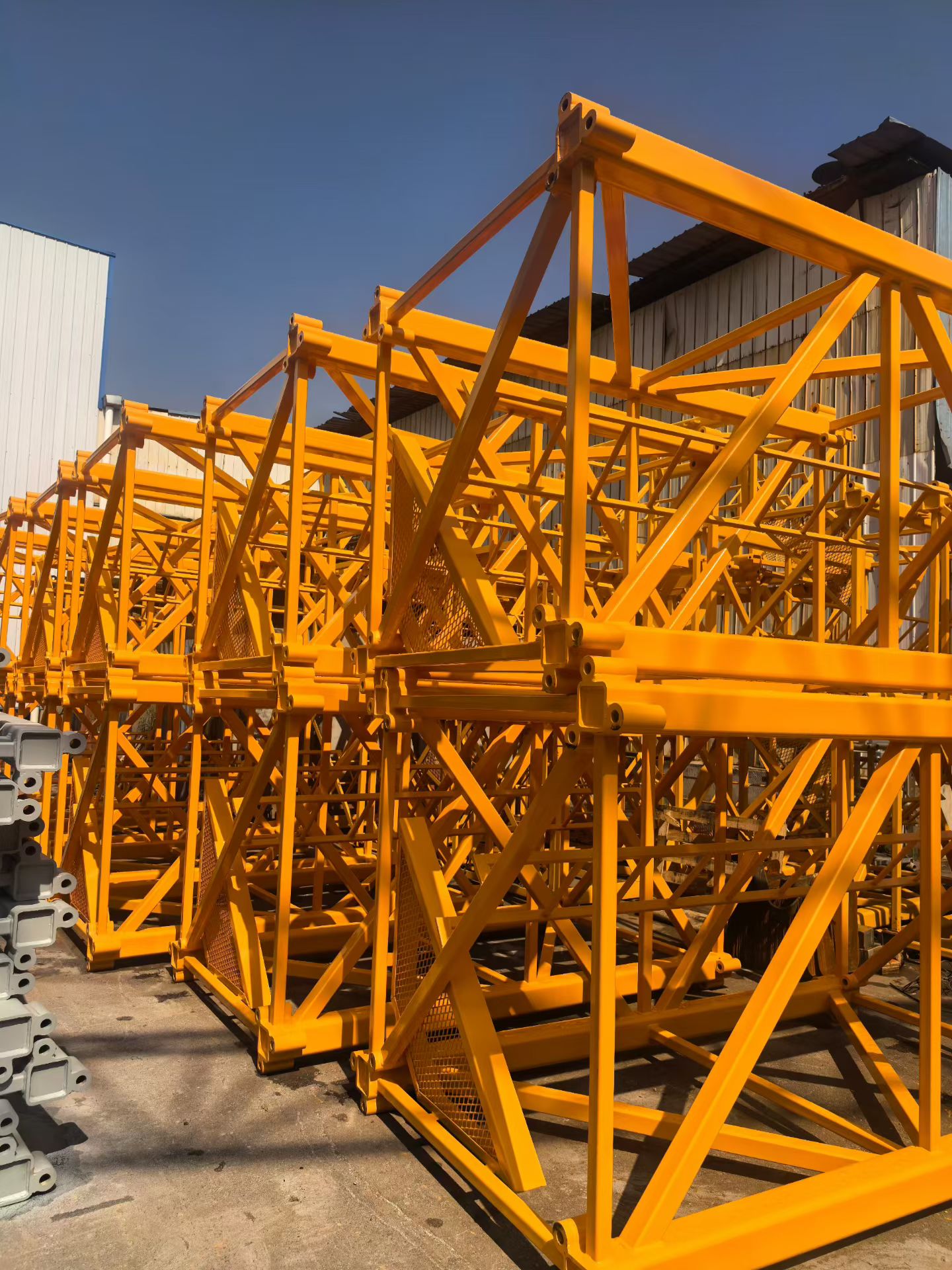
▌ APPLICATION NOTE · OCTOBER 2026 · MAST STANDARD SECTIONS Mast Standard Sections: Chord Tolerance, Bolting and Interchangeability Every metre of a tower crane’s height is made of the same piece repeated: the mast standard section. It is a lattice of four chords braced by diagonals, bolted end to end, and the whole machine depends on those sections being truly interchangeable. If they are, the crane climbs cleanly and the mast stays plumb. If they are not, every joint becomes a small correction and the error accumulates with height. This note looks at the section itself rather than the crane around it. It covers what the chords and bracing are made from, why tolerance matters more than appearance, how the bolted joints should be made up, and what a buyer should ask before accepting a batch of sections. The relevant framework is the crane maker’s manual, supported by standards such as EN 14439 and ISO 12480-1.
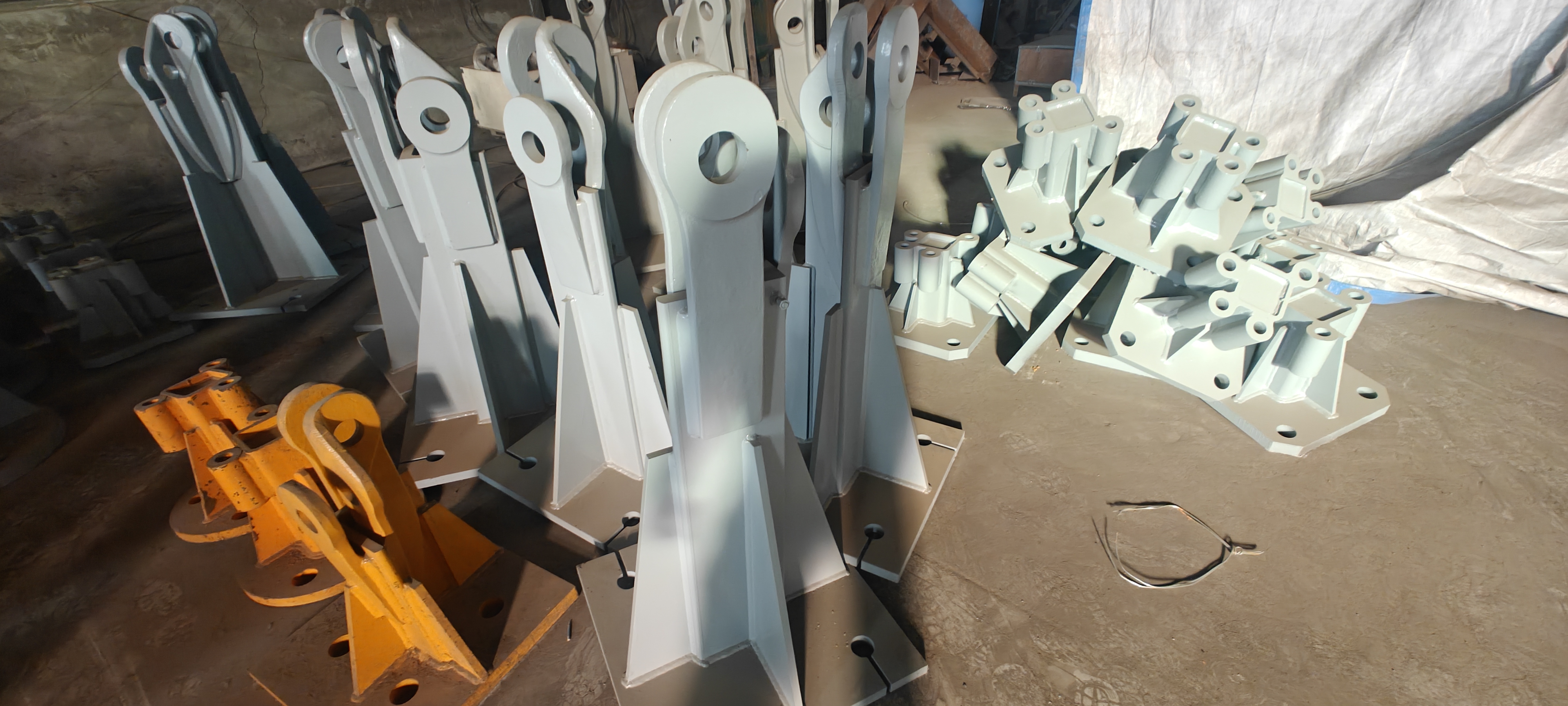
01 WHAT THE SECTION IS MADE OF A standard section is normally built from four square-tube chords at the corners, braced by seamless-tube diagonals welded into a rigid lattice. The chords carry the compressive load of the mast; the bracing keeps the section square and stops the chords from buckling. End plates carry the bolted connection to the next section, and locating pins or spigots align the joint. The material specification matters as much as the geometry. Chord wall thickness, steel grade and weld quality decide the section’s capacity, and two sections that measure the same outside can differ substantially inside. That is why a section should always be bought to the maker’s drawing rather than to a description. ▌ FOUR CHORDS, TUBE BRACING Square-tube chords carry the load; seamless-tube diagonals keep the lattice rigid. ▌ WALL THICKNESS MATTERS Outside dimensions can match while capacity differs, so buy to the drawing. ▌ END PLATES AND PINS The joint is aligned by locating pins or spigots, not by bolts alone. 02 WHY TOLERANCE BEATS APPEARANCE A mast section can look perfectly square and still be out of tolerance. What matters is the relationship between the four chord ends: the flatness of the end plates, the spacing of the bolt holes and the straightness of the chords over the section length. Small errors at each joint add up over a tall mast, and a mast that leans is a crane that fights its own load chart. Tolerance is therefore a manufacturing requirement, not a cosmetic one. A buyer should ask for the maker’s dimensional tolerances and, on a large order, for a dimensional inspection report on a sample section. Visual inspection alone will not reveal a chord that is slightly bowed or an end plate that is not flat. ▌ JOINTS COMPOUND Small errors at each bolted joint accumulate as the mast gets taller. ▌ CHECK THE END PLATES Flatness, hole spacing and chord straightness are the tolerances that matter. ▌ ASK FOR A REPORT On a large order, request dimensional inspection on a sample section. 03 MAKING UP THE BOLTED JOINT The bolted joint is where the section becomes structure. High-strength bolts are fitted with the specified washers and torqued to the maker’s value in the correct sequence, usually working around the joint so the end plates close evenly. Locating pins should engage before the bolts are tightened, because they set the alignment and the bolts hold it. Bolts that have been over-torqued, stretched or corroded should be replaced rather than reused. After a climbing cycle the joint should be re-checked, since the loads of raising and lowering can settle the plates. A torque wrench and the maker’s table are part of the tool kit, not optional accessories. ▌ PINS FIRST Engage the locating pins before tightening, so the joint is aligned before it is clamped. ▌ TORQUE IN SEQUENCE Work around the joint to the maker’s value so the end plates close evenly. ▌ RE-CHECK AFTER CLIMBING Re-check the joint after each climbing cycle and replace stretched or corroded bolts.
04 INTERCHANGEABILITY IN PRACTICE Interchangeability is often assumed and rarely proven. Two sections from different sources may share a bolt pattern and still differ in pin diameter, end-plate thickness or chord grade. Fitting one to the other may be physically possible and structurally wrong. The safe rule is that sections are interchangeable only when the maker confirms it, ideally in writing. Where a site keeps a stock of sections, the batch should be traceable: which maker, which drawing, which material certificate. Mixing unidentified sections into a mast is how a crane ends up with a joint nobody can certify. A simple register, kept with the spares, prevents that. ▌ CONFIRM IN WRITING Shared bolt patterns do not prove structural interchangeability. ▌ KEEP A REGISTER Record maker, drawing and certificate for every section held as a spare. ▌ DO NOT MIX BLINDLY Unidentified sections should not be added to a working mast. 05 INSPECTION AND STORAGE On arrival, sections should be checked for chord straightness, weld condition, coating damage and the condition of the end plates and pins. Coating damage should be touched up before the section goes into service, because a small chip becomes corrosion at the joint. Sections should be stored flat and supported, not stacked on uneven ground where the chords can take a permanent set. In service, the checks that matter are the ones the manual calls for after each climbing cycle: joint tightness, chord condition and any sign of movement at the end plates. Catching a loose joint early is far cheaper than discovering it at height. ▌ CHECK ON ARRIVAL Inspect chords, welds, coating and end plates before accepting a batch. ▌ TOUCH UP COATING A small chip at a joint becomes corrosion if it is not repaired. ▌ STORE FLAT Support sections evenly so the chords do not take a permanent set. PROCUREMENT IMPACT ● Order mast sections to the maker’s drawing, not to a generic description. ● Ask for wall thickness, steel grade and weld specification on the quotation. ● Request dimensional inspection reports on sample sections for large orders. ● Specify bolt grade, washers and torque values together with the sections. ● Keep a traceable register of every section held as a spare. WHAT TO WATCH ● Watch for sections that look identical but differ in chord wall thickness. ● Watch the end plates, because flatness and hole spacing decide how the joint closes. ● Watch pin diameter and spigot fit; these set alignment before the bolts do. ● Watch coating damage at joints, which is where corrosion starts first. ● Watch the manual. Tolerance and torque values come from the maker, not from habit. ABOUT ZN Industrial (Shandong Zhinuo) designs and manufactures crane safety monitoring systems, positioning systems and mechanical auxiliary handling equipment for overseas construction, industrial and steel markets. Standards and regulations vary by market — local rules still govern your site. ▌ CONTACT shandongzhinuo@outlook.com +86 176 6371 0314 · en.znaqkj.com SOURCES · EN 14439 · ISO 12480-1 · BS 7121 · crane maker’s manual |
Articles / crane
Mast Standard Sections: Chord Tolerance, Bolting and Interchangeability
The mast is built from identical bolted lattice sections. This note explains what makes sections interchangeable, how bolted joints should be made up, and where tolerance and bolt grade decide whether a crane stays plumb.