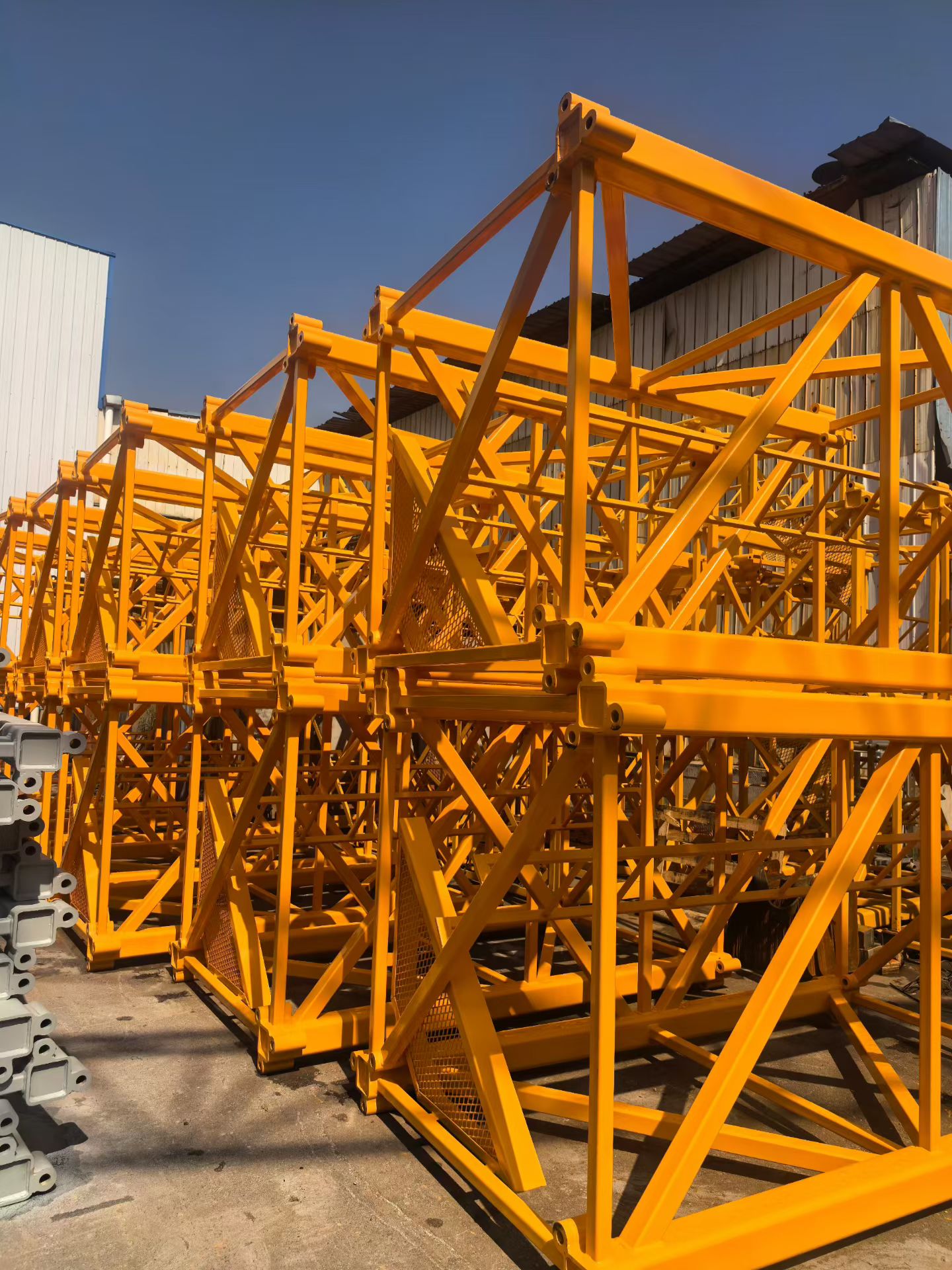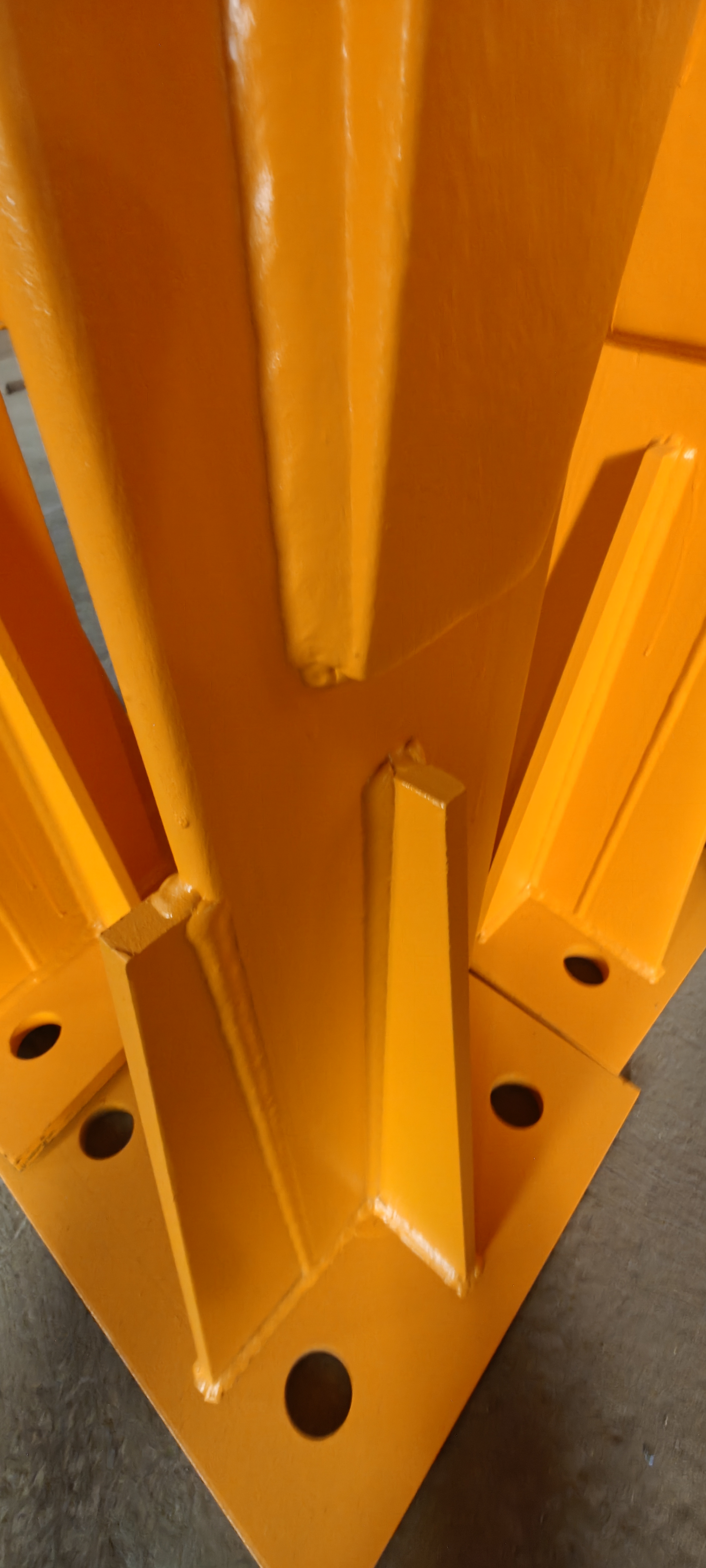
▌ APPLICATION NOTE · OCTOBER 2026 · CORROSION PROTECTION Corrosion Protection for Tower Crane Parts: Coating, Galvanising and Maintenance Tower crane accessories spend their lives outdoors, often near the sea, and they corrode in the least visible places. Water collects at bolted joints, inside box sections and at the edges of a coating chip. Corrosion rarely announces itself with a dramatic failure; it thins the steel quietly until a section that was designed for a load is no longer able to carry it. This note covers the two common protection systems, paint and hot-dip galvanising, explains where corrosion starts and how to inspect for it, and sets out how damage should be repaired. The crane maker’s specification defines the coating system; this note explains how to keep it working.
01 PAINT AND GALVANISING Paint protects steel with a barrier coating. A good system uses surface preparation, a primer and one or more topcoats, and its performance depends heavily on the preparation. Paint applied over rust or mill scale fails early, often from the edges inward. Hot-dip galvanising protects steel by coating it in zinc, which acts as both a barrier and a sacrificial layer. It is more durable than paint in harsh environments and is common on structural accessories such as bolts, brackets and embedded parts. Galvanising can still be damaged by impact and abrasion, and the damage needs repair. ▌ PREPARATION DECIDES PAINT Paint performance depends on surface preparation more than on the topcoat. ▌ ZINC PROTECTS TWICE Galvanising is a barrier and a sacrificial coating. ▌ GALVANISING CAN BE DAMAGED Impact and abrasion expose steel and need repair. 02 WHERE CORROSION STARTS Corrosion starts where water sits and where the coating is thin. Bolted joints trap moisture between plates. Box sections and hollow members collect water if drainage is poor. Edges, welds and the cut ends of galvanised parts have less protection. The underside of a member, which nobody sees, is often the first place to rust. On a crane, the parts most at risk are the ones closest to the ground or the sea: foundation hardware, the base frame and the lower mast sections. Those are also the parts that are hardest to inspect once the crane is working. ▌ WATER TRAPS Joints, hollow sections and edges hold moisture and corrode first. ▌ THIN COATING Edges, welds and cut ends have less protection than flat surfaces. ▌ LOW AND COASTAL Foundation and lower mast parts are most exposed and hardest to see. 03 INSPECTION Inspection looks for coating breakdown rather than for red rust alone. Blistering, cracking, chalking and discolouration are early signs that the coating is failing. On galvanised parts, a dull grey surface is normal; white rust indicates moisture trapped against the zinc, and brown rust indicates the zinc has been consumed. Inspection should include the hidden faces and the joints. A mirror and a light are more useful than a quick look from the ground. Where section loss is suspected, thickness measurement is the only reliable way to know how much steel remains. ▌ LOOK FOR BREAKDOWN Blistering, cracking and chalking signal coating failure before rust. ▌ WHITE RUST White rust on galvanising means moisture is trapped against the zinc. ▌ MEASURE IF IN DOUBT Section loss needs thickness measurement, not visual judgement.
04 REPAIRING DAMAGE Small coating damage should be repaired promptly, before corrosion spreads under the surrounding coating. The area is cleaned back to sound coating or bare steel, prepared as the system requires and recoated with a compatible product. Galvanising damage can be repaired with a zinc-rich coating approved for the purpose. Repair is not only cosmetic. A chip at a bolted joint, left alone, becomes corrosion that loosens the joint and reduces its clamping force. Prompt repair is cheaper than the joint rework it prevents. ▌ REPAIR SMALL, EARLY Prompt repair stops corrosion spreading under sound coating. ▌ PREPARE BEFORE RECOATING Clean back to sound coating or bare steel before applying repair. ▌ ZINC-RICH FOR GALVANISING Use a compatible zinc-rich product to repair galvanised damage. 05 DESIGNING OUT CORROSION The best protection is detail design. Drain holes in hollow sections, avoidance of water traps, sealed joints and smooth transitions all reduce the places where corrosion starts. When specifying accessories, it is worth asking how water will drain and how the part will be inspected in service. A coating system is only as good as the detail it covers. A part that is well painted but traps water will still corrode, and a part that drains well will outlast one that does not. ▌ DRAIN AND SEAL Drain holes and sealed joints remove the places corrosion starts. ▌ ASK ABOUT DETAIL Specify how water drains and how the part will be inspected. ▌ DETAIL BEATS COATING A well-drained part outlasts a well-painted one that traps water. PROCUREMENT IMPACT ● Specify the coating system: surface preparation, primer, topcoats or galvanising. ● Ask for coating thickness or galvanising weight in the specification. ● Require drain holes and sealed joints on hollow or boxed parts. ● Confirm touch-up materials and method are supplied with the parts. ● Include coating inspection in the site maintenance schedule. WHAT TO WATCH ● Watch joints and hollow sections, where water collects and corrosion starts. ● Watch edges, welds and cut ends for thin or missing coating. ● Watch white rust on galvanising, which signals trapped moisture. ● Watch hidden faces and undersides, which are missed by a quick look. ● Watch small chips; repairing them early prevents joint rework later. ABOUT ZN Industrial (Shandong Zhinuo) designs and manufactures crane safety monitoring systems, positioning systems and mechanical auxiliary handling equipment for overseas construction, industrial and steel markets. Standards and regulations vary by market — local rules still govern your site. ▌ CONTACT shandongzhinuo@outlook.com +86 176 6371 0314 · en.znaqkj.com SOURCES · ISO 12944 · EN ISO 1461 · crane maker’s coating specification |
Articles / crane
Corrosion Protection for Tower Crane Parts: Coating, Galvanising and Maintenance
Tower crane accessories live outdoors and corrode quietly. This note covers paint and galvanising, where corrosion starts, and how to inspect and repair protection before section loss begins.