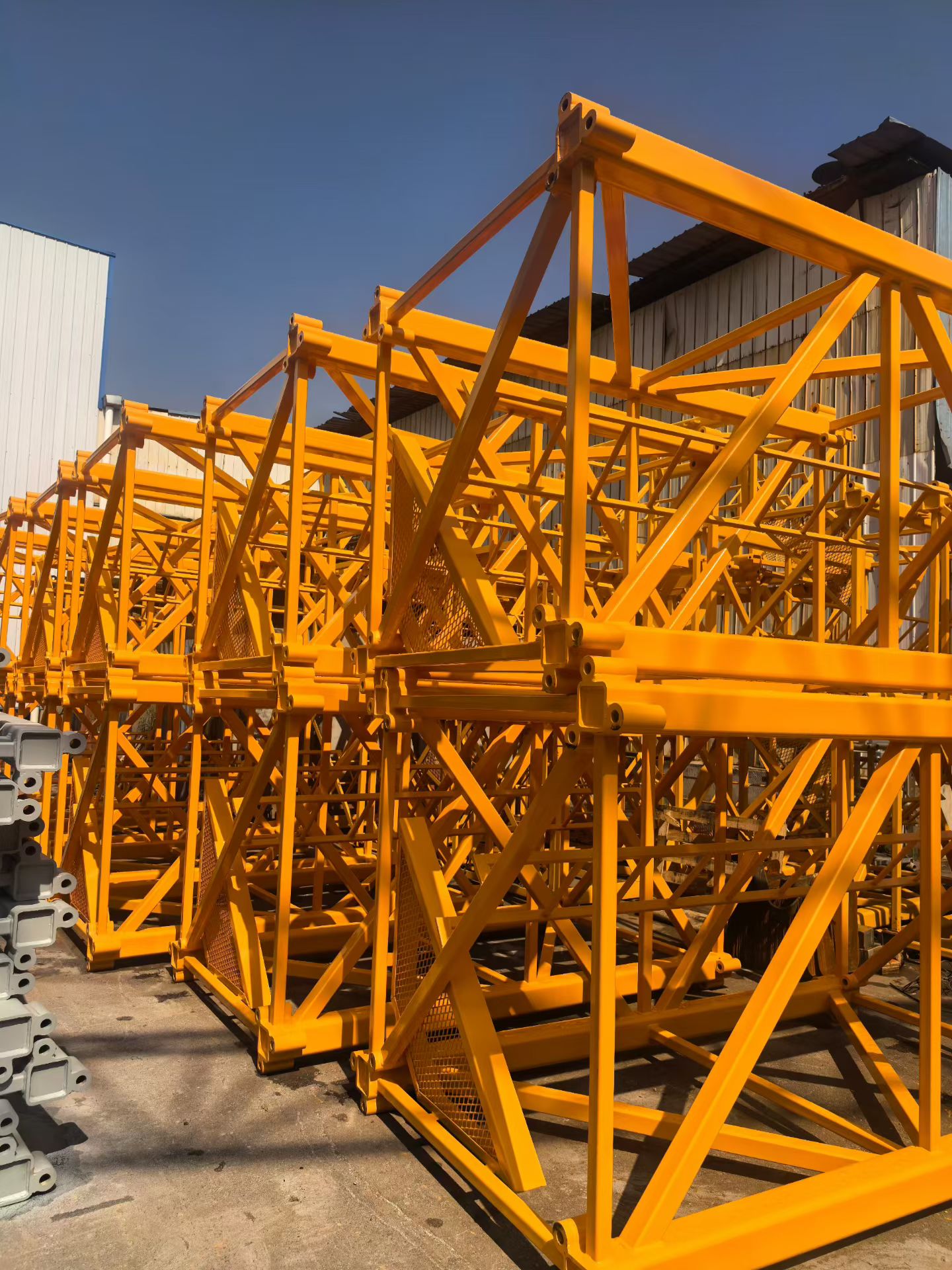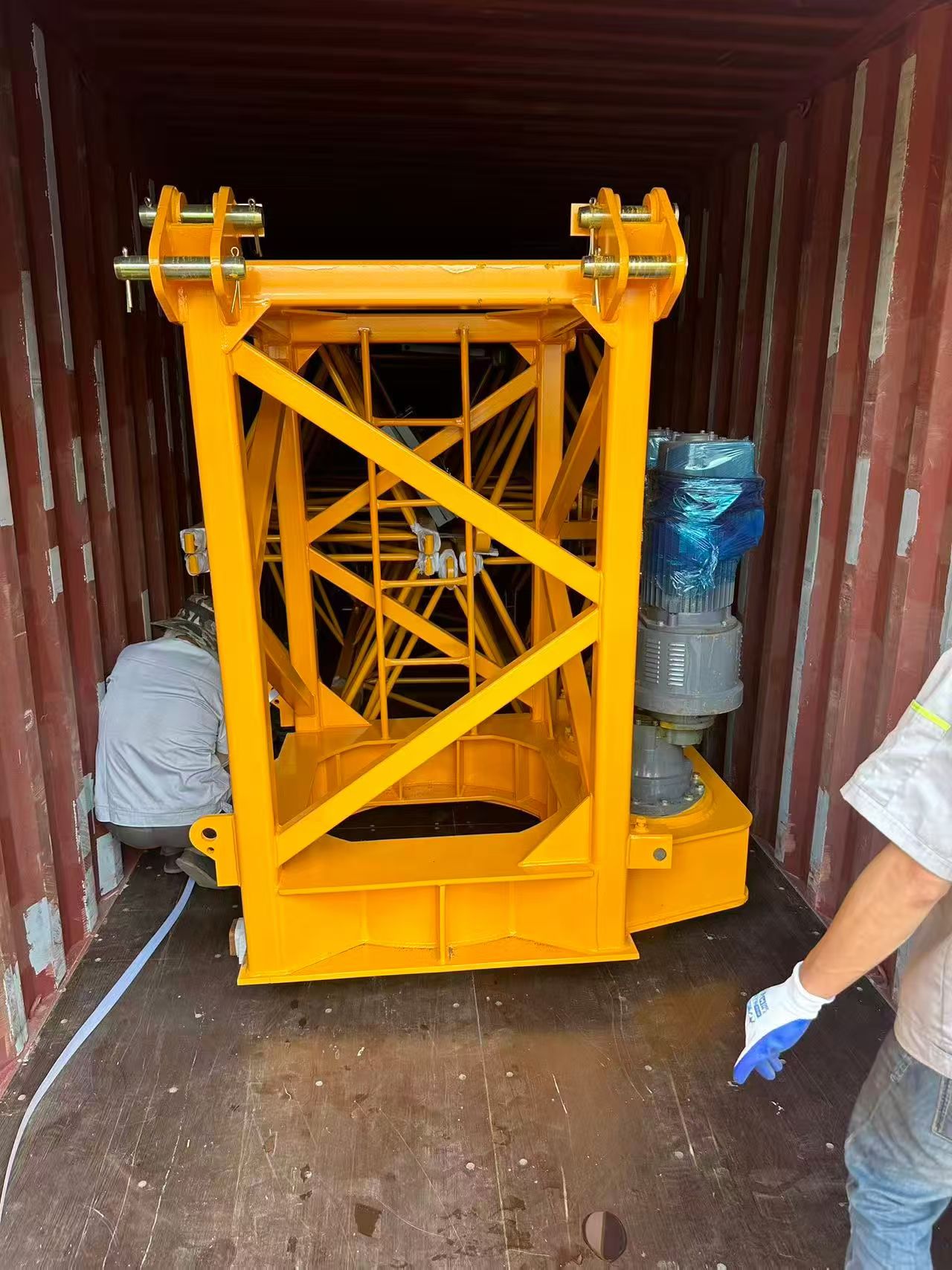
▌ APPLICATION NOTE · OCTOBER 2026 · COMPATIBILITY Compatibility and Interchangeability: Matching Accessories to Crane Brands and Models Tower cranes look similar and are not. Two machines of the same nominal capacity may use different chord sizes, bolt patterns, pin diameters and counterweight sets. When a site buys an accessory, the question is not only whether it will fit, but whether it is the correct part for that machine. Confusing the two is how a crane ends up with a part that looks right and is not. This note explains how to identify a crane and its accessories, what to check before accepting a part as compatible, and why documented confirmation is worth more than a visual comparison.
01 IDENTIFY THE MACHINE FIRST Compatibility starts with identification. The crane’s make, model and serial number, together with the jib length and configuration, define which accessories are correct. Without those details, any part is a guess. The nameplate and the crane documentation are the sources to use. Where the original documentation is missing, the crane maker may still be able to identify the configuration from the serial number. Failing that, the parts themselves must be measured and matched, which is slower and less reliable. ▌ MAKE, MODEL, SERIAL Identification is the first step in choosing any accessory. ▌ JIB LENGTH AND CONFIGURATION These change which parts are correct. ▌ USE THE DOCUMENTATION The nameplate and manual beat guesswork. 02 WHAT TO CHECK BEFORE ACCEPTING A PART A physical fit is the minimum, not the proof. The dimensions that matter depend on the part: chord size and bolt spacing for a mast section, pin diameter for a pendant, thread and grade for bolts, and rated capacity for a hook block. Material and coating should also match the specification. It is worth checking the parts that are easy to overlook: locating pin size, end-plate thickness, hole diameter and the grade marking on bolts. These are the details that separate a visually similar part from an interchangeable one. ▌ FIT IS THE MINIMUM Physical fit does not prove structural compatibility. ▌ CHECK THE DETAILS Pin size, plate thickness, hole diameter and bolt grade all matter. ▌ MATERIAL AND COATING The specification covers more than dimensions. 03 THE RISK OF SUBSTITUTION Substitution is common when a part is not available quickly. A section from another maker, a bolt of a similar grade or a pendant of a slightly different length may allow the crane to be assembled. It also changes the structure in ways that may not be obvious and may not be safe. The risk is highest on structural parts, where load paths and tolerances are tight, and lowest on genuinely generic items such as standard fasteners of the correct grade. The buyer should know which category a part falls into before substituting. ▌ SUBSTITUTION CHANGES STRUCTURE A part that allows assembly may not be correct. ▌ STRUCTURAL PARTS ARE HIGHEST RISK Load paths and tolerances leave little room for approximation. ▌ KNOW THE CATEGORY Distinguish generic fasteners from crane-specific structural parts.
04 DOCUMENTED CONFIRMATION Where interchangeability is claimed, it should be documented. A written confirmation from the crane maker or an authorised supplier, referencing the specific part numbers and the machine, is the only reliable basis for using a part from a different source. A register of confirmed interchanges is useful for a fleet. It records what has been approved, for which machine and on what basis, so the decision does not have to be remade each time a part is ordered. ▌ GET IT IN WRITING Interchangeability should be confirmed against specific part numbers. ▌ REFERENCE THE MACHINE A generic approval is not an approval for your crane. ▌ KEEP A REGISTER A fleet record avoids re-deciding the same question. 05 WORKING WITH A SUPPLIER A good supplier will ask for the crane details before quoting, and will say when a part is crane-specific. That conversation is more valuable than a catalogue photo, because it surfaces the details that decide compatibility. A supplier who quotes without asking is a supplier to check carefully. The best outcome is a parts list that names the machine and the part numbers, with the basis for compatibility recorded. That list becomes the reference for every future order. ▌ A GOOD SUPPLIER ASKS Crane details should come before a quotation. ▌ BEWARE THE QUICK QUOTE A quote without questions is a quote to verify. ▌ BUILD A PARTS LIST A machine-specific list becomes the reference for future orders. PROCUREMENT IMPACT ● Record the crane make, model, serial, jib length and configuration. ● Check the specific dimensions that decide fit for each part type. ● Verify material grade and coating against the specification. ● Require written confirmation for any part claimed to be interchangeable. ● Keep a machine-specific parts list for future ordering. WHAT TO WATCH ● Watch for parts that fit but differ in pin size or plate thickness. ● Watch substitutions on structural parts, where the risk is highest. ● Watch bolt grade markings, which are easy to overlook. ● Watch verbal assurances; interchangeability should be documented. ● Watch suppliers who quote without asking for crane details. ABOUT ZN Industrial (Shandong Zhinuo) designs and manufactures crane safety monitoring systems, positioning systems and mechanical auxiliary handling equipment for overseas construction, industrial and steel markets. Standards and regulations vary by market — local rules still govern your site. ▌ CONTACT shandongzhinuo@outlook.com +86 176 6371 0314 · en.znaqkj.com SOURCES · crane maker’s parts documentation · EN 14439 · ISO 12480-1 |
Articles / crane
Compatibility and Interchangeability: Matching Accessories to Crane Brands and Models
A part that fits is not always a part that is correct. This note explains how to match crane accessories to a machine, what to verify and why written confirmation matters more than a visual comparison.